
Graduates
- Scored 40+ in the IB and 7s in the subjects they teach.

Learn how to choose IGCSE subjects for the IB DP and university applications. Our guide offers expert advice on subject groups and keeping your options open.

Will choosing a particular subject limit your option in the future? Which IGCSE subjects are the easiest? How many subjects must you take? You’ve got loads of questions. We get it!
Picking your IGCSE subjects is stressful. Our team of IGCSE and IB graduates want you to know: The “perfect subjects” don’t exist. So take a deep breath. Relax. We’re here to give you some Pro advice to make your subject decisions much easier.
Scroll down to learn how important IGCSE results actually are, and find our stress-free guide to choosing your subjects.
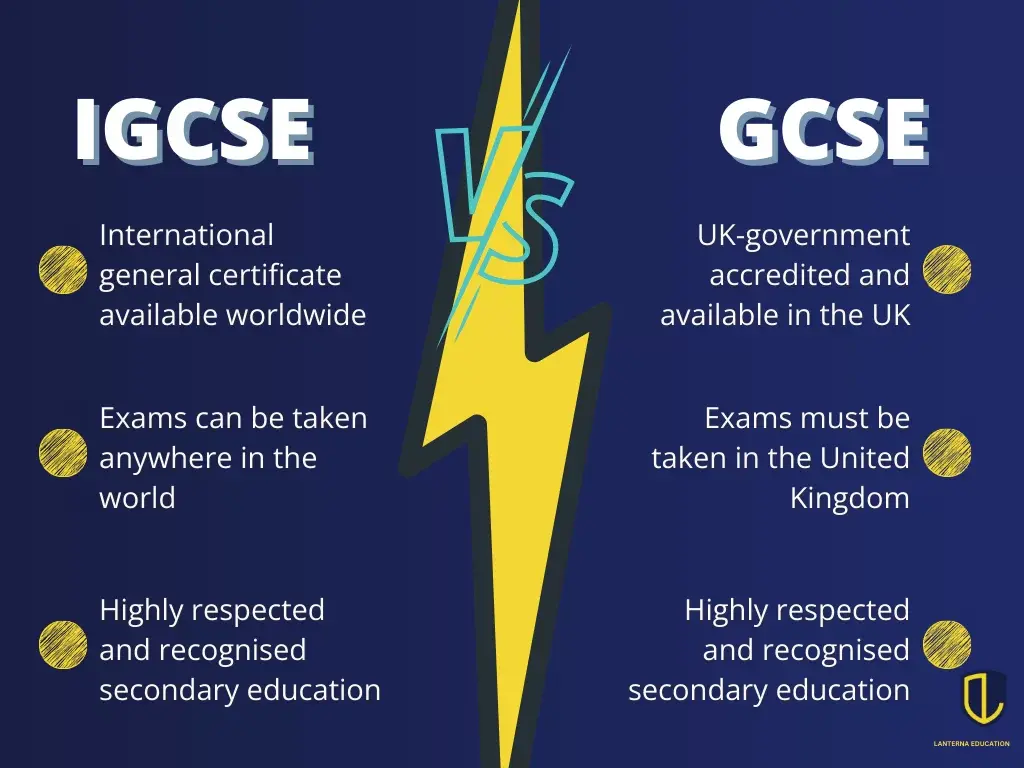
Universities accept both qualifications because they both provide quality education. And an international certificate. The biggest difference between the IGCSE and GCSE is where students can do the exams.
The General Certificate of Secondary Education (GCSE) is UK government-accredited and is available to students in the UK.
Students must take GCSE exams in the UK. Those taking International GCSEs must travel to the UK to write their GCSE exams.
The IGCSE is an international general certificate of secondary education for students all over the world.
Students can take their exams almost anywhere there’s an IB World School.
If you’re worried, a university won’t accept a student just because they took a particular subject instead of another subject. Don’t panic. They won’t.
The truth is: IGCSE-level subjects and IGCSE examinations aren’t really the focus of your university applications. Most schools and universities want to check your mandatory IGCSE Subject Group results:
Remember, we’re using the Cambridge IGCSEs subject requirements for our example; the Pearson Edexcel International GCSE qualification has different requirements.
Top-ranking universities and other educational institutions worldwide are more interested in International Baccalaureate (IB) or/and A-Level minimum requirements and grades.
That’s why the IGCSE certificate is great! It teaches you everything you need to know to succeed. And it proves your academic potential to university admissions boards.
Still not sure you should take the Cambridge IGCSE exams? Check out this blog post.
We don’t want you to stress about the IGCSE’s additional and core subjects. But that doesn’t mean you shouldn’t take your subject choices seriously.
It’s an excellent opportunity to learn about yourself and the world. And it helps prepare students for the IB DP, university, and career.
Below are some things you should remember when choosing subjects for the IGCSE certificate. Use this guide to make finding the right subjects for you a stress-free and easy process.
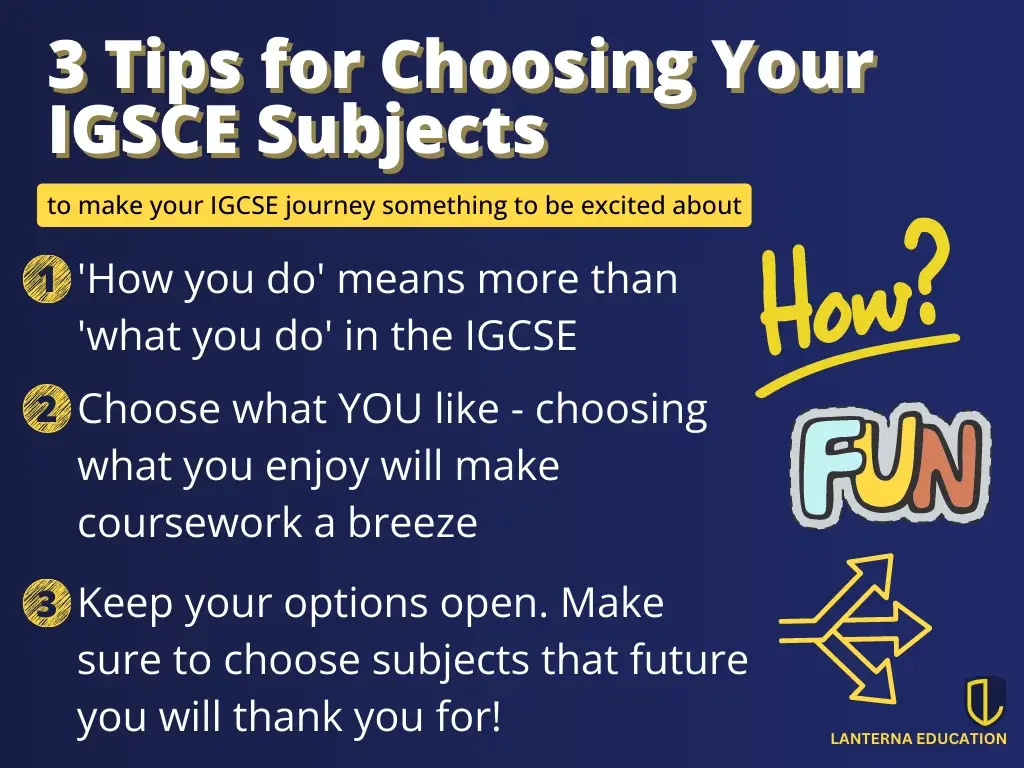
That’s right! It’s all about how you did in the IGCSE. Not which science subjects (or any other subjects) you do.
Subjects don’t make or break someone’s success. They won’t ruin your options in the future or get between you and your dreams. Usually, a top university asks for a student’s subject mark to ensure they did well.
But there are other reasons too… Here are the 3 most popular reasons universities ask for IGCSE results:
If you’re interested in a field of academic studies like medicine and engineering, independent schools and higher education providers may want to see your IGCSE results for a relevant subject.
For example, a university admissions board might want to see your Mathematics mark to make sure you’ve got the basic knowledge to start further academic study and become a qualified chemical engineer, neurologist, rocket scientist or whatever your dream job is.
How students learn, state schools, private education institutions and learning resources (like textbooks) in most subjects are very different. And students around the world do this certificate.
This is why some international universities ask for a student’s IGCSE subject marks. But they’re not worried about which subjects you choose!
Educational institutions look at core subjects like English Language A: (Language and Literature) or Mathematics to make sure local and international candidates applying to study with them have a quality education.
Studying a university-level subject is no joke, so universities want to make certain the students they accept have the right knowledge and skills to meet the university’s requirements and international standards.
The third most popular reason international schools and universities ask for a student’s IGCSE subject results is to get an idea of their academic journey throughout the IGCSE curriculum.
Your overall performance shows an educational institution how hard you work and proves your commitment to your studies.
Plus, it shows them you didn’t turn a blind eye to your Mathematics coursework. Or neglected other subjects because of your IGCSE extracurricular activities.
You didn’t misread that. You really should pick what you like. Students learn faster and perform better when they actually care about what they’re doing (aka active learning).
If you choose subjects you’re really interested in, you’ll make coursework enjoyable and do much better – which means higher grades! Choose subjects for your IGCSE curriculum that:
Meet the minimum number of subjects and requirements you need to get your Cambridge IGCSE certificate
You REALLY enjoy
Or subjects you find interesting! The IGCSE offers over 70 subjects, so there are loads of options. You don’t have to take a subject if you’d much rather do something else.
Our advice? It’s best to cover all your bases. Especially if you’re still not sure about what you want to study or do after school. Students must do a minimum of 5 subjects and can take up to 14 subjects. And, if students take a seventh subject, they can earn a Cambridge International Certificate of Education (ICE). This award looks great on your university applications!
Make sure you choose subjects in all five curriculum areas of the Cambridge IGCSE subject areas:
To make your university application stand out, you should study at least one of the science subjects, a foreign language, and a Humanities and Social Science subject.
This way, you’ll have all the subjects you need for your undergraduate course and future studies. Plus, they look fantastic on your university applications!
You need between 5 and 7 subjects, and you’ve already got Group 1: English (Language and Literature), Group 2: Mathematics, and Group 3: A science subject (Biology/Chemistry/Physics).
So you only need to choose a few more subjects:
The Lanterna Education tutors have loads of experience helping students reach their full potential. Through personalized attention, our one-on-one tutoring sessions empower students to build confidence, overcome challenges, and achieve academic success on their educational journey.
And we would love to help you, so we offer one-on-one tutoring sessions with experienced iGCSE tutors. We also provide Free study tips and learning resources for IGCSE students.
Good luck! We hope you find the right subjects to help you thrive in the IGCSE!

Learn how to prepare for IGCSE success with expert advice on setting SMART goals, effective revision tips, and understanding the qualifications. Trusted by IB graduates.

Mastering IGCSE Science is easier than you think. Learn expert study hacks and revision tips from tutors, understand exam formats, and focus on key concepts for top marks.

Learn why IGCSEs are a great choice for future IB students. Discover global university recognition, flexible courses, and skills that help you succeed worldwide.

Learn how to improve memory for IGCSE & IB exams with expert revision tips. Discover proven techniques like mnemonics and reorganization for top grades.

Learn how to take effective IB notes with expert tips on condensing information, sticking to essentials, and using your own words. Ace your IB revision and exams.

Understand the IGCSE test: your complete guide to this qualification. Learn about key subjects, differences from GCSE, and how it paves the way for A-Levels and IB.

Learn how to do well on your IGCSE Physics exam with expert revision tips. Discover practical ways to make real-world connections and improve your understanding.

Boost your IGCSE Maths success with proven revision tips from an expert. Learn how to tackle difficult problems, study effectively, and take great notes for true mathematical growth.
600+ handpicked tutors from across the world with the best background and experience.


Geography shouldn't limit your potential. Lanterna provides premium online IB tutoring across the world, being partners with 250+ IB schools worldwide. Our country guides explore how the IB landscape shapes up and how our tutoring supports it perfectly.

1 hour of online tutoring in any subject with a 40+ IB graduate who scored a 7 in your subject.
No strings attached. By filling out the form you accept our T&Cs.
We are IB experts committed to achieving your academic goals.