
Graduates
- Scored 40+ in the IB and 7s in the subjects they teach.

Learn how to improve memory for IGCSE & IB exams with expert revision tips. Discover proven techniques like mnemonics and reorganization for top grades.

“If I had a better memory, all this work would be no problem”. Does this thought sound familiar? Does it creep up on you before a test? Day to day in school? Many of us tell ourselves that we’ve just got a bad memory and that there’s nothing we can do about it, but more often than not what distinguishes ‘good memorisers’ from ‘bad memorisers’ isn’t so much their brain power, but the techniques that they use!
While there is of course more to the IGCSEs than just remembering facts and figures, being able to recall all these facts, formulas, words and ideas is a massive part of getting the top grade. It’s not enough to be able to understand something in class. Wherever stage you’re at in your IGCSEs, you’re going to have to remember all the things you’re learning when it comes to the final exams.
You might think that this is what revision is for, and that revision still feels a long time away. But actually, there’s a lot that you could be doing to improve your memory right now. And given that some research suggests the adult attention span has got worse by roughly 12 minutes in the last decade, you might want to think twice before relying on the technology around you to get by! From techniques developed over the course of centuries to practical things you can do every day, here are my top tips for improving your memory.
Mnemonics are techniques created to help us remember large chunks of information, and they use methods such as association, sense memory and reorganisation to give your brain shortcuts to what it needs to know. A study of mnemonic devices back in the 60s showed that students who regularly used these devices increased their test scores by up to 77%!
Examples include:
Playing with the words and letters in the information you need to remember can be really effective in turning things that are hard to remember into something, well, memorable. These are especially useful for subjects with hard facts, like sciences. You can create your own or find ones already in use. e.g. “How I wish I could recollect pi” – count the number of letters in each word of that phrase to get the sequence of digits: 3.141592!
Breaking down big pieces of information into smaller ‘chunks’ of information. We already do this to remember things like telephone numbers, when we’ll break down a list of 10 digits or more into a few smaller chunks of 3 or 4 numbers. So, instead of memorizing a long formula, break it down into smaller chunks and it will prove much easier.
How many song lyrics do you think you’re holding in your head right now? Did you sit down and learn them? We doubt it. Music, especially catchy melodies, does wonders for helping words stick in our brains. That’s why half the adverts on TV contain some sort of jingle, or set the brand name to music in some way. You don’t have to be a composer to make this technique work for you though, and you don’t even need to write a whole song (although if you want to, go for it!), but reciting information or words to a melody is a great way to make it stay in your head. Even if you’re not the most musically inclined person, you can take a famous song that you know and just replace the lyrics!
Repetition is probably the most common method of revision and memorising information, but it’s actually one of the most inefficient methods. Most of us find it boring, and that is exactly because repetition alone involves only the most basic, surface level of the brain. Instead, find a way to reorganise the information, and connect it with what you already know – activate your brain. In fancy terms this is called ‘elaborative rehearsal’. So, next time you learn something new in class, don’t just copy down what the teacher is saying, rewrite it in your own words. Next time you are reading a big chunk of text, make notes in your own words in the margins. Think about how this information connects with what you’ve learnt before, and how it changes the information.

Learn how to improve your memory for IB success with expert revision tips and proven techniques like mnemonics. Get the facts to stick and ace your final exams.
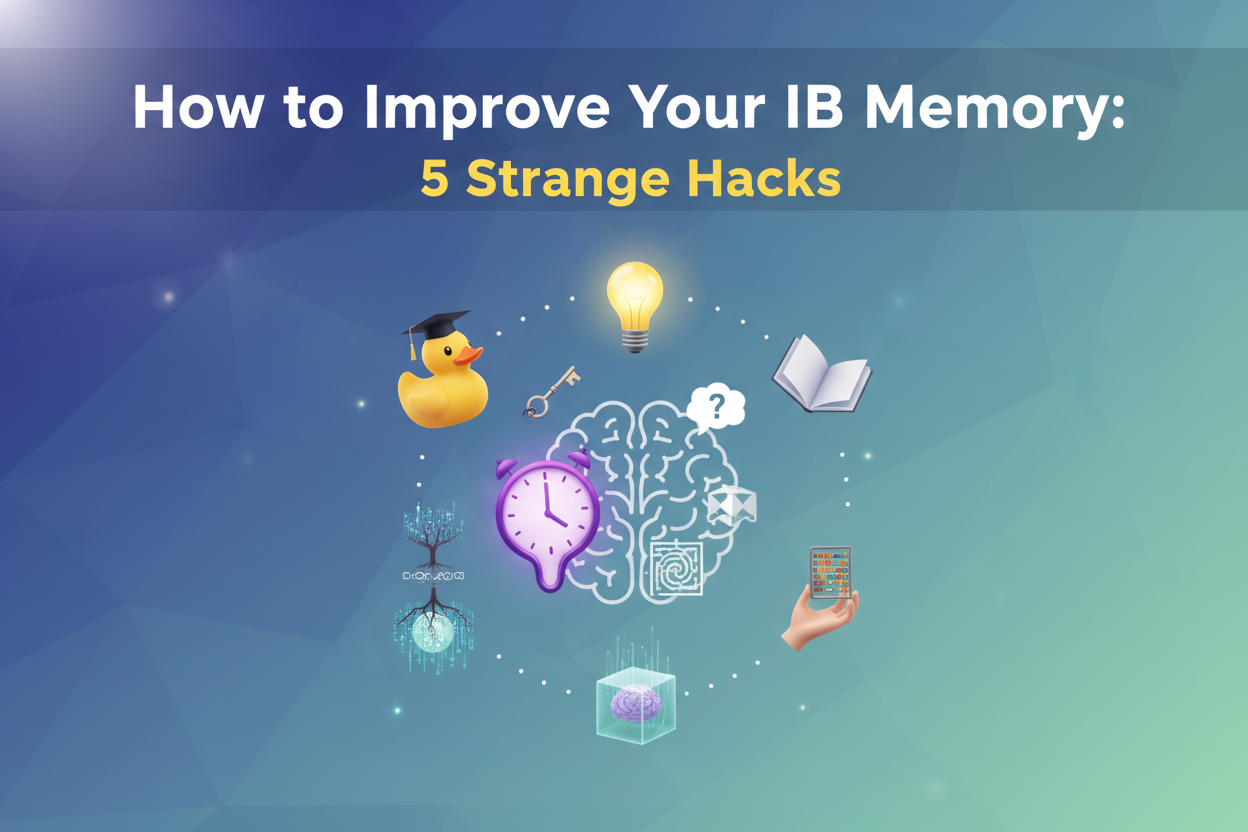
Learn how to improve your IB memory with 5 strange, expert-approved revision tips. Use scents, audio notes, and other IB memory hacks to boost your exam scores.

Understand the IGCSE test: your complete guide to this qualification. Learn about key subjects, differences from GCSE, and how it paves the way for A-Levels and IB.

Mastering IGCSE Science is easier than you think. Learn expert study hacks and revision tips from tutors, understand exam formats, and focus on key concepts for top marks.

Learn how to prepare for IGCSE success with expert advice on setting SMART goals, effective revision tips, and understanding the qualifications. Trusted by IB graduates.
Learn how to do well on your IGCSE Physics exam with expert revision tips. Discover practical ways to make real-world connections and improve your understanding.

Learn how to take effective IB notes with expert tips on condensing information, sticking to essentials, and using your own words. Ace your IB revision and exams.

Boost your IGCSE Maths success with proven revision tips from an expert. Learn how to tackle difficult problems, study effectively, and take great notes for true mathematical growth.
600+ handpicked tutors from across the world with the best background and experience.


Geography shouldn't limit your potential. Lanterna provides premium online IB tutoring across the world, being partners with 250+ IB schools worldwide. Our country guides explore how the IB landscape shapes up and how our tutoring supports it perfectly.

1 hour of online tutoring in any subject with a 40+ IB graduate who scored a 7 in your subject.
No strings attached. By filling out the form you accept our T&Cs.
We are IB experts committed to achieving your academic goals.