
Graduates
- Scored 40+ in the IB and 7s in the subjects they teach.

Learn how to plan your IB revision schedule effectively and avoid study burnout with expert revision tips, including ideal daily study hours and flexible timetables.

Ahead of you lies a vast stretch of empty days, and it’s your responsibility to fill them. Planning your schedule from now until exams can be incredibly daunting. How many hours a day should I be studying? How many breaks should I be taking? Can I have days off? Getting to grips with these things will allow you to you feel confident and balanced, and prevent you from under-preparing or burning out.
When you feel over-worked and stressed for a prolonged period of time, you may feel physically and emotionally drained. This is study burnout, and it’s the last thing you want just before your exams. Study burnout should not be interpreted as a positive sign of ‘working hard.’ A real sign of study success should be getting to the end of revision feeling healthy and energised. This is why it is so important to maintain a balanced, reasonable routine.
A Top Tip From Me To You…
Make a list of things you enjoy doing. Things that take 15 mins, 1 hour, half a day, a full day. Whenever you feel tired, worn-down, exhausted – at risk of study burnout – resort to this list, and pick something from it.
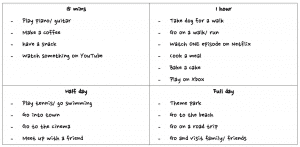
If I was to sum up the ideal revision technique in one phrase, it would be “short and sharp.” Working in short, intense stretches is by far more efficient than forced study sessions that drag on for hours on end. There is no set amount of time you should be working every day. The time can be variable from day to day, depending on how productive you’re feeling. However, to give you some guidelines, I would say if you’re averaging 6 hours of studying each day, you’re absolutely on track. Perhaps you could aim for 3 hours in the morning, and 3 in the afternoon.
The Lanterna Tip: Remember – don’t be put-off by those students who brag about working for 12 hours a day. No-one really revises solidly for that long, and even if they do, I can guarantee this is not effective.
As I said above, don’t force yourself to follow a rigid, stringent daily schedule. It’s inevitable that you will be more productive on some days than others, and that’s ok. Set guidelines, but don’t freak out if you’re a little off target every so often. There’s no formula for exactly when and what you should be studying in the IB. Find what works for you. Experiment – what time of day are you most productive? Aim to tackle your most difficult topics then. Are you a morning person? If so, make the most of the early hours of that day. If not, start and finish a little later.
It is recommended that you take at least 10 minutes break every hour of studying. Again, there is no rule to work out how many breaks you should be taking. Every time you feel stressed or bored, take a break. You may need to remind yourself to break every now and then – perhaps set a timer!
Separate your relax and study environments. Having a reliable and consistent study area should not be underrated. It’s great to have somewhere comfortable and convenient that you can dependably go and study when you want. Ideally, this will not be your bedroom. Make sure you separate your study and relax environments. Sometimes however, after you’ve been working in the same place for weeks on end, it can start to feel stale and claustrophobic. If this happens, try switching up your study space. Try a local coffee shop with an internet connection and find a quiet spot, how about the public library? If you’re feeling isolated, go round a friends house for the day and study together.
.png)
Beat IB stress and burnout with expert techniques. This guide covers time management, effective revision, and mindfulness habits to help you stay calm, focused, and ace your exams.

IB Stress & Burnout Survival Guide: Essential habits and support for parents. Learn to recognize stress indicators (sleep changes, withdrawal) and find healthy coping strategies.

Master the final days before your IB exams! Get essential last-minute exam tips: what to do and what to avoid (sleep, not cramming new content). from IB 40+ grads.

Cope with IB exam stress using expert tips for preparation, handling panic during the test, and post-exam reflection. Get practical advice and revision tips.

Learn how to prepare for IB exams with proven strategies and revision tips from an IB graduate. Master planning, self-care, and effective study methods.

Master your IB revision: Learn key skills and strategies, from setting goals and creating effective timetables to specialized revision tips for content and concept-heavy subjects.

Prioritize self-care and mental health during IB exams. Learn simple revision tips from an expert tutor to stay positive, motivated, and productive while studying.

Manage your IB exam stress with expert, practical tips. Learn how structured revision plans and self-care can help you conquer exam season anxiety.
600+ handpicked tutors from across the world with the best background and experience.


Geography shouldn't limit your potential. Lanterna provides premium online IB tutoring across the world, being partners with 250+ IB schools worldwide. Our country guides explore how the IB landscape shapes up and how our tutoring supports it perfectly.

1 hour of online tutoring in any subject with a 40+ IB graduate who scored a 7 in your subject.
No strings attached. By filling out the form you accept our T&Cs.
We are IB experts committed to achieving your academic goals.