
Graduates
- Scored 40+ in the IB and 7s in the subjects they teach.

Get the ultimate guide to acing IB Business Management. Master the 15 analytical tools, learn expert exam strategies for Papers 1, 2 & 3, and follow our proven revision plan to score a 7.
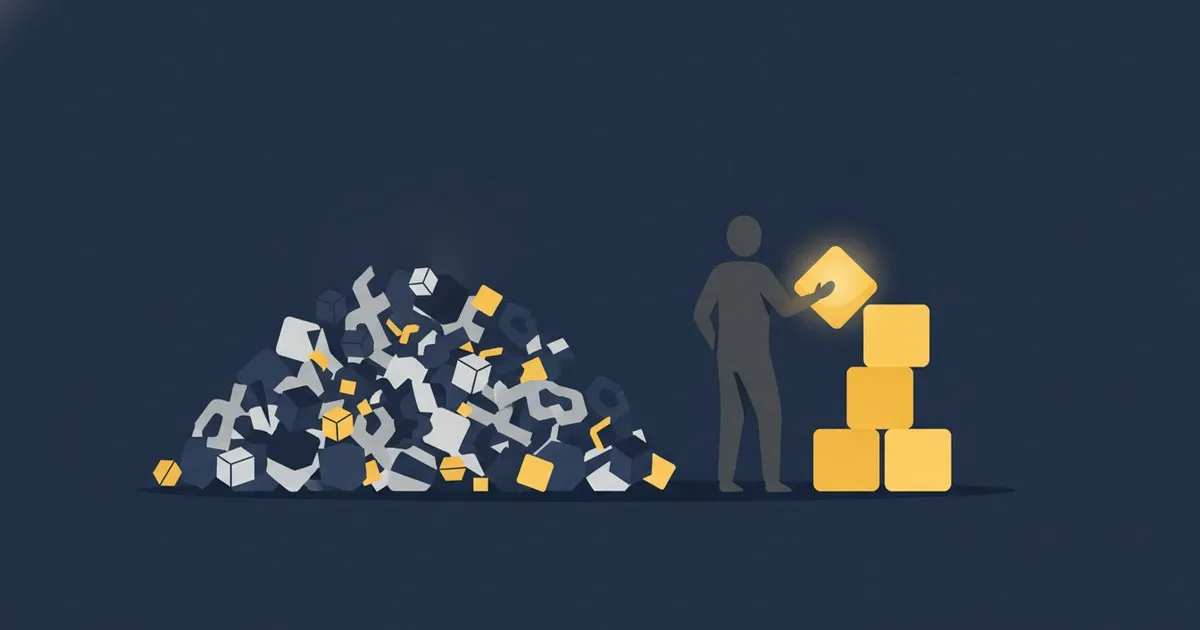
Feeling buried under a mountain of case studies, financial ratios, and motivational theories? You’re not alone. IB Business Management is a beast of a subject, packed with content that can feel impossible to manage. But what if you had a blueprint, an insider’s guide to not just survive, but thrive?
This guide is your strategic plan, built by IB experts who have been in your shoes and scored the top marks. We’ll cut through the noise and give you the essential tools and techniques to conquer the content and walk into your exams with total confidence.
By using this guide, you will be able to:
The new Business Management syllabus isn't about memorizing definitions. It’s about thinking like a modern business leader. The IB wants you to be a strategic analyst who can solve complex problems.
At the heart of the course are four key concepts: Creativity, Change, Ethics, and Sustainability. These aren't just buzzwords. They are the lenses you must use to analyze every case study. A standard answer might explain a cost-saving strategy. A 7-level answer will evaluate the ethical and sustainable implications of that strategy.
The course is split into five interconnected units. Think of them as different departments in a company. A decision in Marketing (Unit 4) will always impact Finance (Unit 3) and Human Resources (Unit 2). Top students show they understand these connections.
The BMT is a set of 15 analytical frameworks that are non-negotiable for success. You don’t just learn about them; you use them to dissect case studies and structure your answers in every exam and the IA. They are your key to moving from describing a situation to properly analyzing it.
SL students need to master the first eight, while HL students need all fifteen.
| Toolkit Category | Tool Name | Level | What It's For |
|---|---|---|---|
| Situational Analysis | SWOT Analysis | SL & HL | Evaluating internal Strengths/Weaknesses vs. external Opportunities/Threats. |
| Situational Analysis | STEEPLE Analysis | SL & HL | Scanning the big picture: Social, Technological, Economic, Ethical, Political, Legal, and Environmental factors. |
| Situational Analysis | Descriptive Statistics | SL & HL | Using numbers (mean, median, standard deviation) to analyze data objectively. |
| Situational Analysis | Force Field Analysis | HL Only | Weighing the forces for and against a change to see if it's viable. |
| Situational Analysis | Hofstede’s Dimensions | HL Only | Analyzing cultural differences before a company goes global. |
| Situational Analysis | Linear Regression | HL Only | Forecasting future trends (like sales) based on past data. |
| Strategic Planning | Business Plan | SL & HL | The formal blueprint for a new business venture. |
| Strategic Planning | Gantt Chart | HL Only | A visual tool for managing complex project timelines and resources. |
| Strategic Planning | Critical Path Analysis | HL Only | Finding the fastest way to complete a project by identifying essential tasks. |
| Decision-Making | Ansoff Matrix | SL & HL | A framework for growth strategies, balancing products and markets to assess risk. |
| Decision-Making | BCG Matrix | SL & HL | Managing a product portfolio by categorizing products as Stars, Cash Cows, Question Marks, or Dogs. |
| Decision-Making | Decision Trees | SL & HL | A quantitative tool to calculate the financial value of different choices based on probabilities. |
| Decision-Making | Circular Business Models | SL & HL | Evaluating sustainable strategies like recycling, sharing, and extending product life. |
| Decision-Making | Porter’s Generic Strategies | HL Only | A framework arguing that competitive advantage comes from cost leadership, differentiation, or a focus strategy. |
| Decision-Making | Contribution Analysis | HL Only | Calculating per-unit profit to make smart decisions on pricing and production. |
Knowing the content is only half the battle. You need a specific strategy for each assessment component.
| Assessment Component | Weighting (SL) | Weighting (HL) | Duration (SL) | Duration (HL) |
|---|---|---|---|---|
| Paper 1 | 35% | 25% | 1h 30m | 1h 30m |
| Paper 2 | 35% | 30% | 1h 30m | 1h 45m |
| Paper 3 | N/A | 25% | N/A | 1h 15m |
| Internal Assessment | 30% | 20% | 20 hours | 20 hours |
This paper is a test of application. The case study is released months in advance, so examiners expect you to know it inside and out. Generic, theoretical answers will get crushed.
Paper 2 is about thinking on your feet with unseen data. It has a heavy focus on calculations, so have your calculator ready.
This HL-only paper is the final boss. It’s based on an unseen case study about a social enterprise. The structure is predictable, which you can use to your advantage. The 17-mark final question is where the battle is won or lost. It's marked on four strict criteria:
The Internal Assessment (IA) is an 1,800-word research project on a real-world business issue.
For the 4,000-word Extended Essay (EE), the key is Criterion C: Critical Thinking (12 marks). To score well here, you must go beyond description.
Last-minute cramming doesn't work for the IB. You need a strategic, long-term approach based on how your brain actually learns.
| Revision Phase | Timeline | Key Actions |
|---|---|---|
| Phase 1: Consolidate | 6 Months Out | Audit your syllabus knowledge. Identify your weak spots. Create flashcards for all key terms and a master formula sheet for all calculations. |
| Phase 2: Apply | 3 Months Out | Focus on applying the Business Management Toolkit. Practice constructing SWOTs, Decision Trees, etc., for different business scenarios. Finalize your IA/EE drafts. |
| Phase 3: Practice | 2 Months Out | Start doing past paper questions organized by topic. Focus on command terms and structuring your 10-mark answers perfectly. |
| Phase 4: Master the Case | 1 Month Out | The Paper 1 pre-release case study drops. Dissect it line-by-line. Create your master analysis document and practice mock questions you create yourself. |
| Phase 5: Simulate | Final Weeks | Switch entirely to full, timed mock exams. Keep an "Error Log" of your recurring mistakes and do targeted revision to fix them. Prioritize sleep to consolidate your memory. |
The difference between a 5 and a 7 isn't about knowing more definitions. It's about technique and mindset.
By adopting these strategies, you can transform your approach to IB Business Management from one of stress and overload to one of confidence and control. It’s not about being the smartest person in the room; it’s about having the smartest plan.
.png)
Discover 10 famous IB graduates, from world leaders to actors and tech founders, who prove the IB Diploma opens doors to any career path you choose.

Struggling to find an IB Maths IA topic? Explore 50 proven Maths IA topic ideas, hand-picked by an IB expert to inspire your exploration and help you score highly.

Stuck on your IB CAS Project? Get inspiration from 50 expert-curated IB CAS Project ideas and examples covering Creativity, Activity, and Service strands.

What IB Score Do You Need for Top Universities? See the breakdown: 24 (Pass), 30-34 (Good), 38+ (Elite). Set realistic goals for top-tier universities.

Learn how to structure and format your IB Math IA for top marks. Understand the grading criteria and optimal layout used by high-scoring students.

IB Results Day is here. Learn your next steps for university offers and requirements, whether you met your IB scores or need to consider remarks or Clearing.

Struggling with your IB Extended Essay? Get inspired with 100+ Extended Essay Topics and learn the 10 steps for a top EE grade in your diploma.
25 practical, experiment-friendly IB Chemistry IA ideas. Get topic inspiration, plus essential hints on variables, data collection, and avoiding common IA pitfalls for top marks.

Struggling with your IB Biology IA? Discover 30+ expert-curated IB Biology IA Topic Ideas and examples to inspire your research and help you secure a top grade.
600+ handpicked tutors from across the world with the best background and experience.


Geography shouldn't limit your potential. Lanterna provides premium online IB tutoring across the world, being partners with 250+ IB schools worldwide. Our country guides explore how the IB landscape shapes up and how our tutoring supports it perfectly.

1 hour of online tutoring in any subject with a 40+ IB graduate who scored a 7 in your subject.
No strings attached. By filling out the form you accept our T&Cs.