
Graduates
- Scored 40+ in the IB and 7s in the subjects they teach.

Learn how to study IB Psychology effectively with 5 essential revision tips from an expert tutor, covering summarising, planning essays, and developing balanced views.
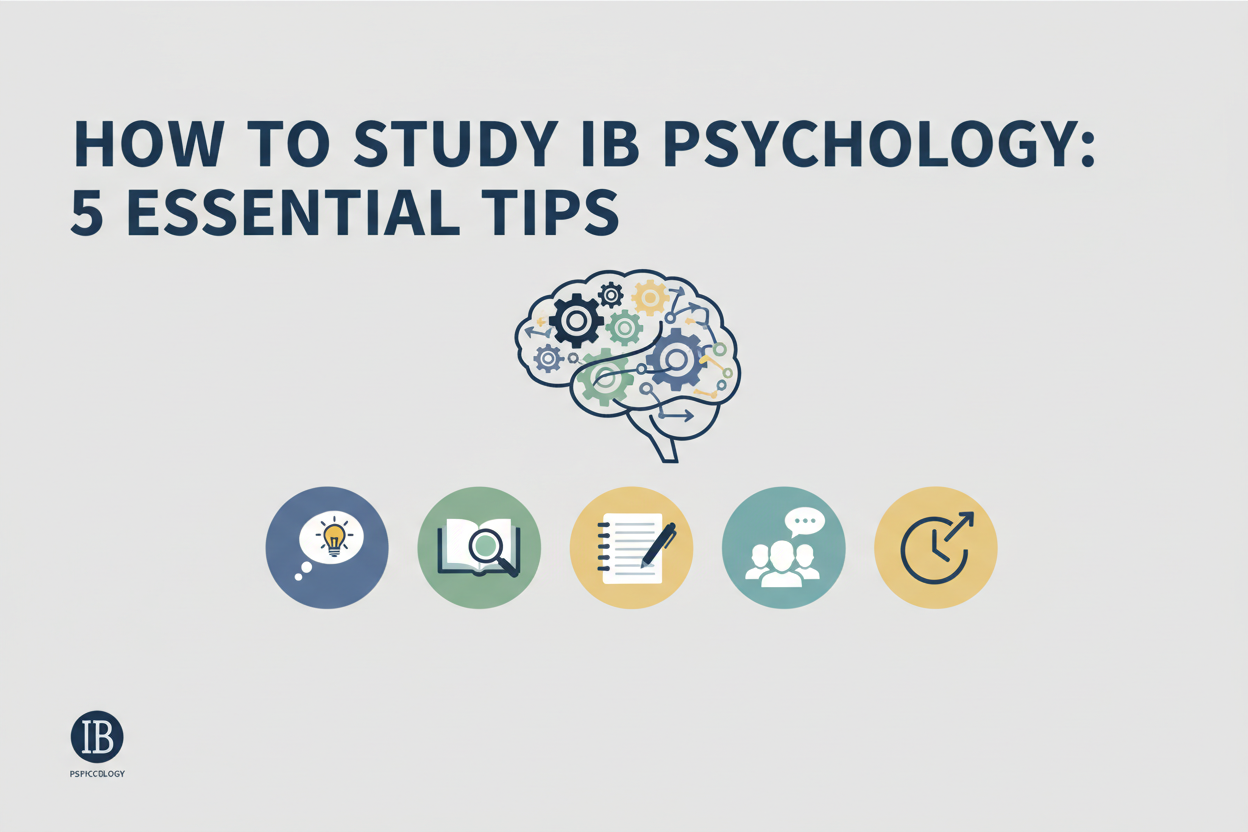
One size fits all isn’t the best approach for reviewing different IB subjects – so this week, let’s tackle the challenge of studying IB psychology!
There’s plenty of concepts and models to learn in IB psychology, which means that one of the most essential skills you need to hone is the art of summarising the main points of a larger text, so you won’t have to waste time rereading the original source! Condensing an entire psychology study into a few sentences can be daunting, so start small – summarise paragraphs as you go, then try to tie together an entire section. That way you can be sure you’ve picked out only the relevant information, and focus on reviewing the major points!
No matter how good you get at summarising large texts, there will always be more things to read in psychology – so why not call a friend? Split up the revision topics within your study group so no one person has to handle the Herculean task of going over everything on their own! And even if you’re doing it alone, there are resources that condense complicated studies and concepts for you – why not check out our free resources as a place to start? This makes covering the entire syllabus much more doable, even alongside your other 5 IB subjects.
Now you’re able to squeeze out the most important points of a psychology text, and you’re no longer doing it all alone, it’s time to cast your net wide – knowledge-wise, I mean! Psychology is the study of human behaviour – our understanding of why we act the way we do constantly evolves as we study it. Some concepts in psychology are decades old, and well-supported – others have been overturned as new evidence points psychologists in a different direction! Understanding how our knowledge of human behaviour has changed and developing your own balanced views on it comes down to the breadth of your knowledge.
After your head has been filled to the brim with psychology facts, you need to spend some time formulating your own opinions about the validity, reliability, and overall usefulness of these studies in describing human behaviour. Human bias is unavoidable in psychology, and part of understanding this is learning how to pick apart the strengths and weaknesses of a psychological theory. Use your wide range of studies to consider a psychology topic from different angles. This is another reason where studying in a group is a big help – it’s easier to debate the pros and cons of something when there are other people to debate with!
The more practice you have developing an essay plan, the easier it will be for you to answer an essay question fully, and the easier it will be for the examiner to find the answers they’re looking for. If you have a clear idea of which studies you intend to use to answer the question, and what your conclusion will be, your introduction will be much more accurate and to the point. There’s nothing more stressful in a psychology exam than to reach the conclusion having made the opposite statement to the one you started with – with some planning, you can spend less time backtracking, and more time showing off your extensive psychology knowledge.
There’s a lot of work that goes into excelling in the IB, but if you stick with these five essentials, you’ll have your psychology revision sorted! If you want a more in-depth look into studying IB Psychology, you can speak to someone about getting some extra help here!
Overcome Procrastination in the IB: Learn how to rewire your brain and tackle big goals like the Extended Essay with small, manageable steps for better IB scores.
.png)
Beat IB stress and burnout with expert techniques. This guide covers time management, effective revision, and mindfulness habits to help you stay calm, focused, and ace your exams.

IB Stress & Burnout Survival Guide: Essential habits and support for parents. Learn to recognize stress indicators (sleep changes, withdrawal) and find healthy coping strategies.

Prioritize self-care and mental health during IB exams. Learn simple revision tips from an expert tutor to stay positive, motivated, and productive while studying.

Optimize your IB study space for maximum productivity. Learn 4 key changes and revision tips from an expert tutor to improve your focus and internal motivations.

Learn how to create your perfect IB revision plan. Choose between structured ('Operation IB') or flexible ('Easy Breezy') approaches and find expert revision tips.

Learn how to de-stress after IB exams and conquer the post-exam blues. Get expert tips on productive relaxation and understanding stress after the IB.
Learn how to succeed in the IB with 5 essential alumni tips for study habits, motivation, and technology control. Get the insider knowledge you need for IB success.
600+ handpicked tutors from across the world with the best background and experience.


Geography shouldn't limit your potential. Lanterna provides premium online IB tutoring across the world, being partners with 250+ IB schools worldwide. Our country guides explore how the IB landscape shapes up and how our tutoring supports it perfectly.

1 hour of online tutoring in any subject with a 40+ IB graduate who scored a 7 in your subject.
No strings attached. By filling out the form you accept our T&Cs.
We are IB experts committed to achieving your academic goals.