
Graduates
- Scored 40+ in the IB and 7s in the subjects they teach.

Master your IB Math AA/AI Paper 2 with this GDC guide. Learn 5 essential calculator functions (TI-84/NumWorks) like finding intersections and probability distributions to save time and score higher.
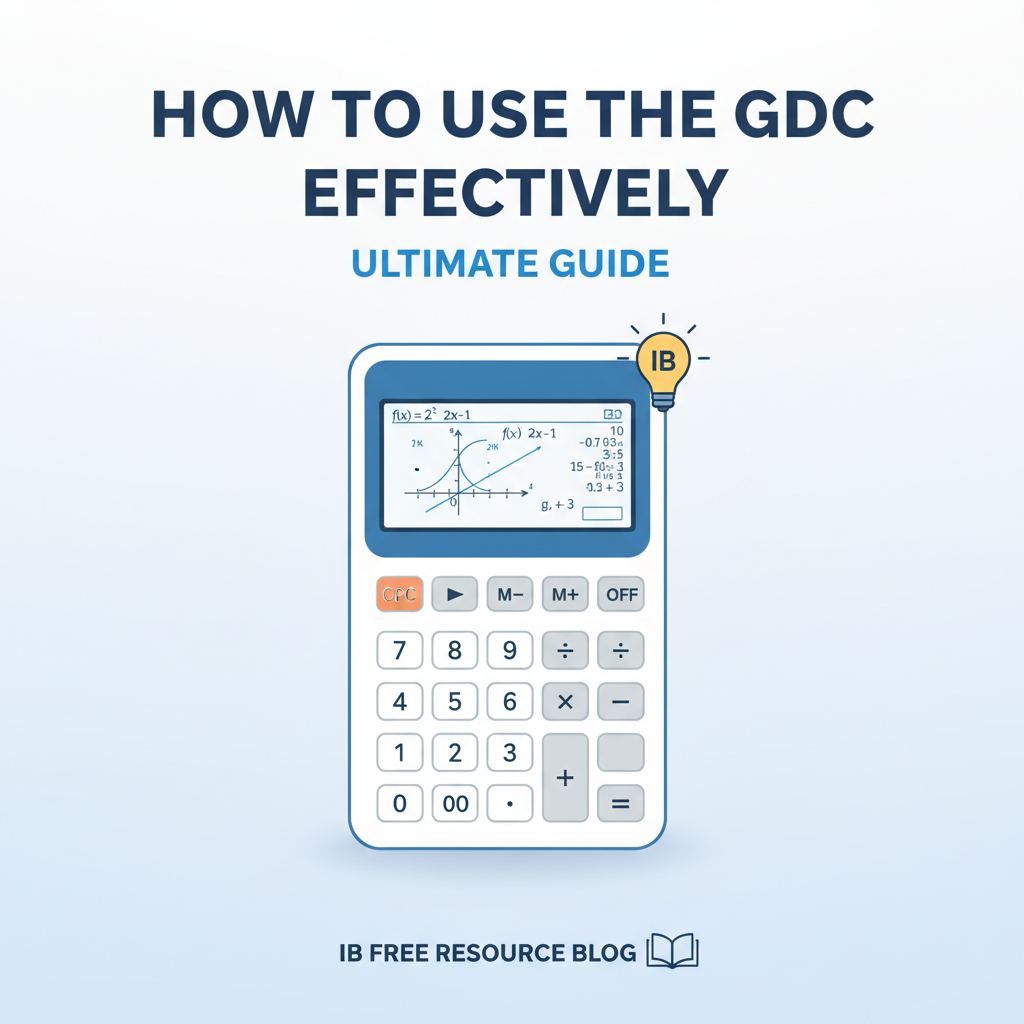
As former IB graduates and experienced tutors, we've seen firsthand how a well-mastered Graphic Display Calculator (GDC) can transform your IB Math Paper 2 performance. This isn't just about punching numbers; it's about leveraging a powerful tool to save precious time, minimize errors, and ultimately secure those higher marks.
This guide will equip you with the insider knowledge to make your GDC an extension of your mathematical thinking, rather than a mere calculator.
Here’s what you'll gain from this guide:
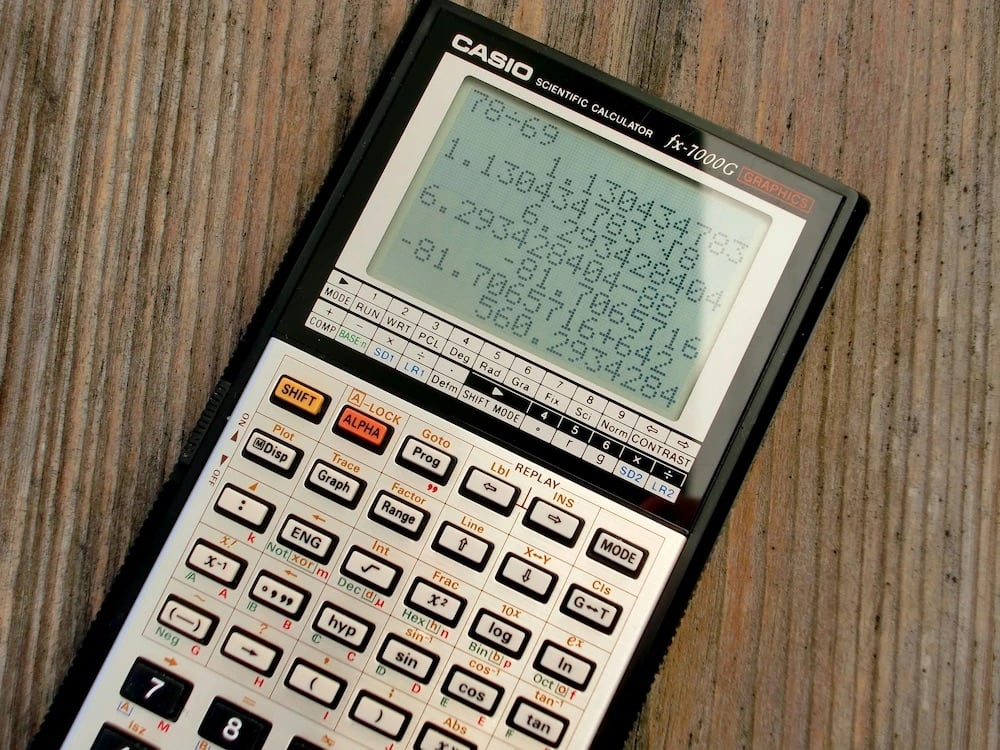
IB Math Analysis and Approaches (AA) and Applications and Interpretation (AI) Paper 2 are designed to test your understanding of mathematical concepts in context, often requiring the use of a GDC. While the questions are structured to assess your problem-solving skills, the GDC is your secret weapon for executing calculations quickly and accurately. This guide focuses on the TI-84 series and NumWorks, two popular choices among IB students.
Let's dive into five essential GDC functions that every IB Math student should master.
Why it's essential: Many Paper 2 problems involve solving systems of equations or finding where a function crosses the x-axis (roots) or intersects another function. Using the GDC's graphical solver is often faster and less prone to algebraic error than manual methods.
Y= and input your two functions, Y1 and Y2.GRAPH. Adjust your window (WINDOW) if necessary to see the intersection clearly.2nd then TRACE (CALC), and select option 5: intersect.ENTER. Do the same for "Second curve?".ENTER. The calculator will display the intersection coordinates.f(x) = ..., g(x) = ...).OK from the graph view or using arrow keys). Select "Intersection".WINDOW settings are likely off. Zoom out first (ZOOM -> 3: Zoom Out) to find the general area, then adjust your Xmin, Xmax, Ymin, and Ymax values in the WINDOW menu for a clearer view.Why it's essential: Paper 2 often requires solving equations that are difficult or impossible to solve algebraically. Finding the roots (where f(x) = 0) with your GDC provides a quick and accurate numerical solution.
Y= and input your function into Y1.GRAPH. Adjust your window if you can't see where the graph crosses the x-axis.2nd then TRACE (CALC), and select option 2: zero.ENTER.ENTER.ENTER. The calculator will display the root (x-value) and y=0.f(x) = ...).Why it's essential: Calculating probabilities manually using formulas and tables is time-consuming and prone to error. The GDC automates this, allowing you to focus on interpreting the question and applying the correct distribution.
2nd then VARS (DISTR).2: normalcdf(.lower bound, upper bound, mean (μ), standard deviation (σ). -1E99 for the lower bound.1E99 for the upper bound.2nd then VARS (DISTR).3: invNorm(.area, mean (μ), standard deviation (σ). Note: area is the cumulative probability to the left of the desired x-value.2nd then VARS (DISTR).A: binompdf(. (Note: on older models it might be option 0).trials (n), p, x value (k).2nd then VARS (DISTR).B: binomcdf(. (Note: on older models it might be option A).trials (n), p, x value (k).binomcdf(n, p, k-1). For P(X > k), use 1 - binomcdf(n, p, k).μ) and standard deviation (σ).n) and probability of success (p).Why it's essential: Paper 2 often presents data sets and asks you to find a model that fits the data, make predictions, or interpret the correlation. Manual regression is impossible in an exam setting.
STAT, then 1: Edit.... Enter your x-values into L1 and corresponding y-values into L2.STAT, then arrow right to CALC. 4: LinReg(ax+b).5: QuadReg.0: ExpReg.Xlist is L1 and Ylist is L2. You can store the equation in Y1 for graphing.Calculate. The calculator displays the equation coefficients and the correlation coefficient (r and r²). (Note: Ensure DiagnosticOn is enabled from the MODE menu or CATALOG to see r and r²).Why it's essential: While finding intersections handles 2-variable systems graphically, your GDC can also solve systems of linear equations with 3 or more variables algebraically, which is a massive time-saver.
2nd then x⁻¹ (MATRIX). Arrow right to EDIT, select 1: [A]. 3x4 matrix.2nd then x⁻¹ (MATRIX). Arrow right to MATH. Scroll down and select B: rref( (reduced row echelon form).2nd then x⁻¹ (MATRIX), select 1: [A] from the NAMES menu, then press ENTER.Mastering your GDC is not about memorizing button sequences; it's about understanding its capabilities and knowing when and how to apply them strategically. By integrating these five essential functions into your study routine, you'll approach IB Math Paper 2 with confidence, efficiency, and a powerful edge.
.png)
Master your IB Math AA IA with this comprehensive guide. Find perfect topic ideas that allow deep mathematical exploration, expert examples, structure tips, and common mistakes to avoid for a 7-level score.
.png)
Struggling with your IB Math AI IA? Our complete guide breaks down the marking criteria and structure. Find a great topic with our expert tips and successful examples.
Choosing between IB Math AA vs AI? Our guide compares the syllabus, difficulty, and university prerequisites for both SL and HL. Make the best choice for your future.
Learn how to structure and format your IB Math IA for top marks. Understand the grading criteria and optimal layout used by high-scoring students.
Struggling to find an IB Maths IA topic? Explore 50 proven Maths IA topic ideas, hand-picked by an IB expert to inspire your exploration and help you score highly.
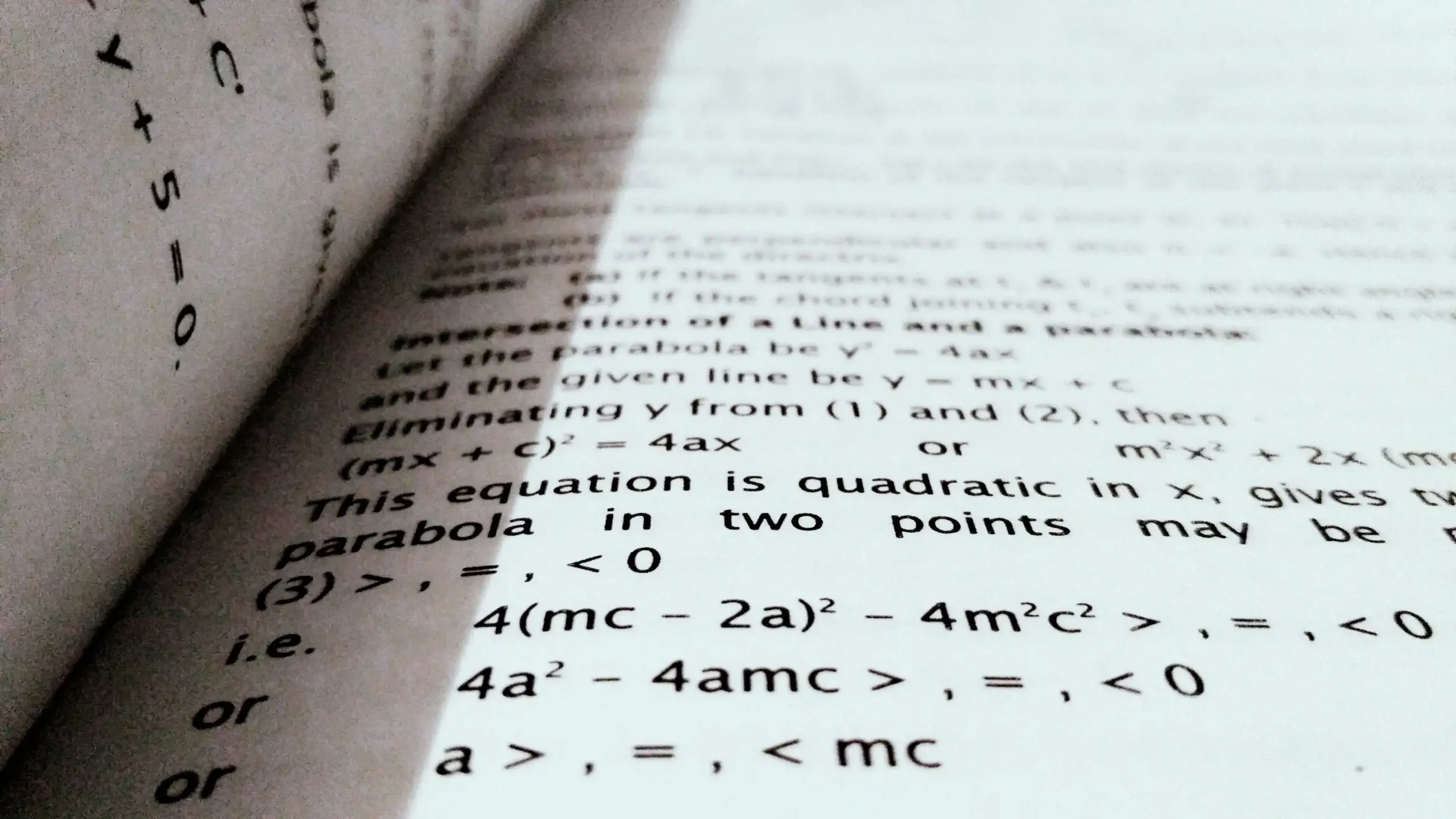
Master your IB Mathematics IA. Learn how to choose a great topic, structure your exploration, and understand the 5 official grading criteria for top tips.

Master your IB Maths exams with expert study and calculator tips. Learn essential GDC functions, effective revision strategies, and how to target your weaknesses.
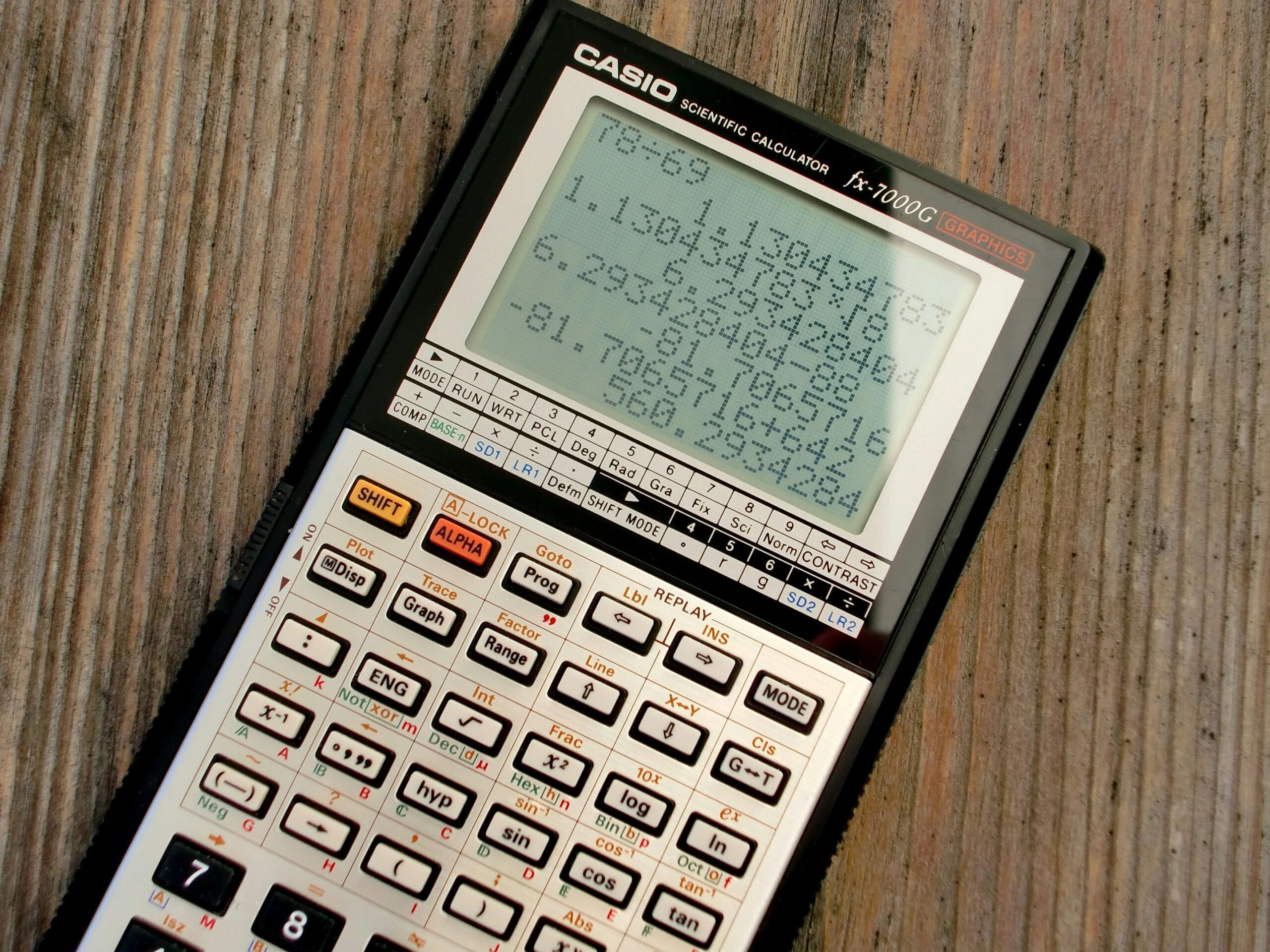
Master your TI-Nspire for IB Math A&I exams. Get expert calculator tips on N-Solve, Linear Regression, and Probability Distributions to minimize mistakes and maximize scores.
600+ handpicked tutors from across the world with the best background and experience.

Geography shouldn't limit your potential. Lanterna provides premium online IB tutoring across the world, being partners with 250+ IB schools worldwide. Our country guides explore how the IB landscape shapes up and how our tutoring supports it perfectly.

1 hour of online tutoring in any subject with a 40+ IB graduate who scored a 7 in your subject.
No strings attached. By filling out the form you accept our T&Cs.
We are IB experts committed to achieving your academic goals.