
Graduates
- Scored 40+ in the IB and 7s in the subjects they teach.

Master IB organization and conquer overwhelm! Get expert tips to manage EE & IA deadlines, prioritize tasks, and build a balanced study schedule without burnout.
.png)
Let's be real: the IB Diploma is a complex juggling act. You are managing six subjects, the Extended Essay (EE), Theory of Knowledge (TOK), Creativity, Activity, Service (CAS), plus a constant stream of Internal Assessments (IAs) and deadlines. Staying on top of it all is absolutely essential, and probably the single most important skill for surviving and thriving in the IB. Thus, you need to think of good organisation not as a chore, but as your secret weapon to reduce stress and unlock higher scores.
Here’s a step-by-step guide to building a rock-solid organisational system that actually works.
Your calendar should be the foundation of your entire IB life. It needs to accurately reflect your daily workload - simply noting down exam dates is nowhere near enough. Every task, study session and deadline should be scheduled in your calendar; if it isn't written down, it's far less likely to happen. Here are some specific tips on how to make your calendar extremely well organised:
When you have ten things to do, how do you decide what to tackle first? The Eisenhower Matrix is a simple tool to stop you from panicking and help you focus on what truly matters, plus it is also simple to use. All you need to do is to categorise every task into one of these four boxes:
These are your top priorities with immediate consequences. Get them done NOW.
Examples: IA draft due tomorrow, studying for this week's math test, finishing a lab report.
This is where real success happens. These are long-term goals for your bigger projects that don't feel urgent yet - but if you ignore them, they'll quickly become stressful emergencies.
Examples: Starting EE research, planning your TOK essay, chunking out your revision for mocks.
These tasks feel urgent and grab your attention, but they don't move you toward your main goals. Spend as little time here as possible.
Examples: Responding to non-essential emails, quick administrative tasks for school.
These are your distractions. Be ruthless in cutting them out when you're supposed to be working.
Examples: Mindless social media scrolling, watching another episode on Netflix when you planned to study.
The biggest cause of IB stress is staring at a huge project like the 4,000-word Extended Essay and having no idea where to start. The solution is task chunking—breaking the monster down into tiny, manageable, less-scary pieces.
Instead of putting "Work on EE" in your calendar, break it down like this:
Each of these tasks is a small, achievable and well-defined task that you can complete in a single study session. This strategy transforms overwhelming projects into a simple checklist.
Being organised means studying smarter, not harder. Follow these techniques to make every study block count.
This is a game-changer for your attention span. Work in an intense, distraction-free sprint for 25 minutes, then take a 5-minute break completely away from your desk. After four "Pomodoros," take a longer 15-30 minute break. This prevents burnout and keeps your concentration sharp.
Simply re-reading your notes or textbooks is one of the least effective ways to revise. Your brain needs to be challenged. Instead, focus on active recall:
Disorganised notes almost guarantee exam-time panic. The format doesn’t matter—paper or digital—but clear structure does. For this reason, we recommend digital tools like Notion, OneNote, or Google Drive, which make organisation and searching effortless.
Here’s a simple, effective folder structure:
Spend 20 minutes at the end of each week putting your notes from class into the right folders. This small habit will save you dozens of hours later.
Finally, remember that you are not a productivity machine. A good organisational system creates space for rest, which is essential for performance.
Now grab your calendars and start organising - your IB success starts here!
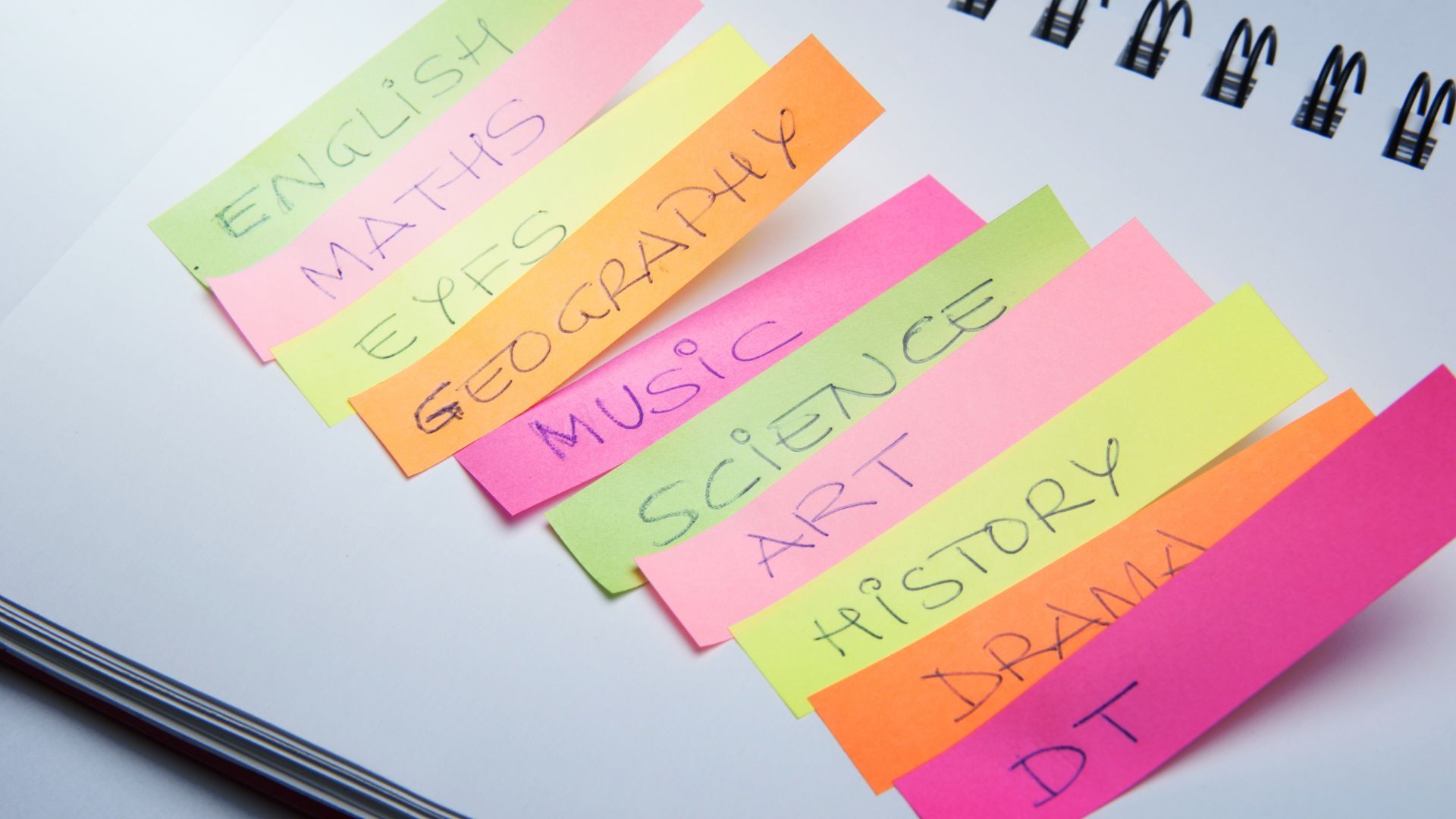
Choosing IB subjects? Align your HL/SL choices with university requirements & career goals. Our strategic guide helps you avoid common mistakes for IB success.

Master the IB Diploma's two-year journey with our complete timeline. Get key deadlines and guidance for the Extended Essay, TOK, IAs, and CAS from DP1 through final exams.
.png)
Master IB note-taking with the ultimate guide. Discover top methods (Cornell, mind maps) and review essential apps (Notion, OneNote) to boost revision and study efficiency.

Master the demanding IB environment. Get essential tips and strategies on how to stay organized, manage your time, and set yourself up for success in the Diploma Programme.
IB Exam Day Checklist: Essential things to do and bring (sleep, breakfast, materials) to ensure a smooth, mishap-free testing experience.

Get your free IB University Application Checklist: a timeline of key tasks (research, personal statements, recommendations) aligned with your IB schedule.
IB Year 2 (DP2) Overview: A roadmap for parents covering IAs/EE completion, university applications, mock exams, and final exams. Anticipate key pressure points.

Ease the MYP to DP "shock"! Guide for parents and students on the transition, highlighting the shift from criterion-based to exam-heavy assessment and suggesting summer prep.
600+ handpicked tutors from across the world with the best background and experience.


Geography shouldn't limit your potential. Lanterna provides premium online IB tutoring across the world, being partners with 250+ IB schools worldwide. Our country guides explore how the IB landscape shapes up and how our tutoring supports it perfectly.

1 hour of online tutoring in any subject with a 40+ IB graduate who scored a 7 in your subject.
No strings attached. By filling out the form you accept our T&Cs.
We are IB experts committed to achieving your academic goals.