
Graduates
- Scored 40+ in the IB and 7s in the subjects they teach.

Master your IB subject choices for university. Get strategic advice on crucial SL vs. HL differences and expert pathways for STEM, Business, and Humanities degrees.
.png)
Choosing Higher Level (HL) and Standard Level (SL) subjects is one of the most important strategic decisions you'll make as you approach the IB Diploma. It’s not just about what you enjoy; it’s about creating a profile that opens the right university doors for you. Get this right, and your pathways to further study and careers become a whole lot clearer.
Let's break down how to make smart choices, thinking like a university admissions officer.
The most obvious differences between SL and HL are the time commitment and the depth of study. The IB has very specific requirements for SL and HL teaching hours, which give you some big clues about the level of detail involved.
| Level | Required Hours | What This Actually Means |
|---|---|---|
| Standard Level (SL) | 150 Hours | Provides a broad overview of the subject. It ensures you have a well-rounded education, a key part of the IB philosophy. |
| Higher Level (HL) | 240 Hours | A significant (60%) amount of additional time to allow a deep dive into the subject. You'll cover more topics, explore complex themes, and face more rigorous assessments. This is your chance to specialise and get really in-depth with the subject. |
Don't guess. Plan!
All IB Diploma schools should have an identified University and Careers Counsellor. Find this person and make use of them.
The single most effective way to choose your HL subjects is to look at what your ideal universities and courses require. Taking HL Physics as your science options "because it looks good" is a poor strategy if you want to study Law.
Your Action Plan:
Your SL subjects can then be chosen based on your interests, strengths, and what will help you secure the highest possible total IB score.
Maths is often a critical HL choice, and with two different pathways, it's easy to get confused. Here’s the breakdown to help you decide.
This is the more traditional, theory-heavy course, focusing on calculus and algebraic manipulation. It's for students who appreciate the elegance of pure mathematics.
This course focuses on using mathematics as a tool to solve real-world problems, with a heavy emphasis on statistics, modelling, and the use of technology.
Beyond Maths, other degree paths have clear HL expectations.
Must-Have HLs: Chemistry is almost always required at HL. Biology at HL is also essential for most medicine, dentistry, and veterinary programs.
Good to Have: A third science or Maths at HL may be required, and will strengthen your application.
Must-Have HLs: Mathematics AA and Physics are non-negotiable at HL for almost every engineering discipline worldwide.
Good to Have: HL Chemistry can be essential for Chemical Engineering.
Must-Have HLs: You need to take the subject you want to study at HL. Applying for History? Take HL History. Applying for English? Take HL English. This proves your specific interest and capability and a combo of both is good for Law.
Good to Have: For Law, subjects that demonstrate analytical and essay-writing skills like History, Economics, or Philosophy at HL are highly valued.
Must-Have HLs: Mathematics at HL (AA is often preferred for more competitive courses) is frequently required.
Good to Have: HL Economics or Business Management show direct interest and provides a strong foundation.
The goal is not to have the "hardest" looking set of HL subjects. The goal is to meet the requirements for your chosen course and achieve the highest possible total score. Universities make offers based on your overall points and specific HL prerequisites. A balanced workload that allows you to score 6s and 7s across the board is infinitely better than burning out with four HL subjects and scraping a pass.
Note that you will need at least 12 points in your HLs and 9 in your SLs to pass the Diploma. So, choose smart, work hard, and keep your eyes on your university prize.

Choosing IB subjects? Align your HL/SL choices with university requirements & career goals. Our strategic guide helps you avoid common mistakes for IB success.
Choosing between IB Math AA vs AI? Our guide compares the syllabus, difficulty, and university prerequisites for both SL and HL. Make the best choice for your future.
Decoding IB Scores: What's a 'Good' Score for Your Dream University? Find score ranges from minimum pass to competitive entry requirements for Oxford, Cambridge, and Ivy League.
What IB Score Do You Need for Top Universities? See the breakdown: 24 (Pass), 30-34 (Good), 38+ (Elite). Set realistic goals for top-tier universities.
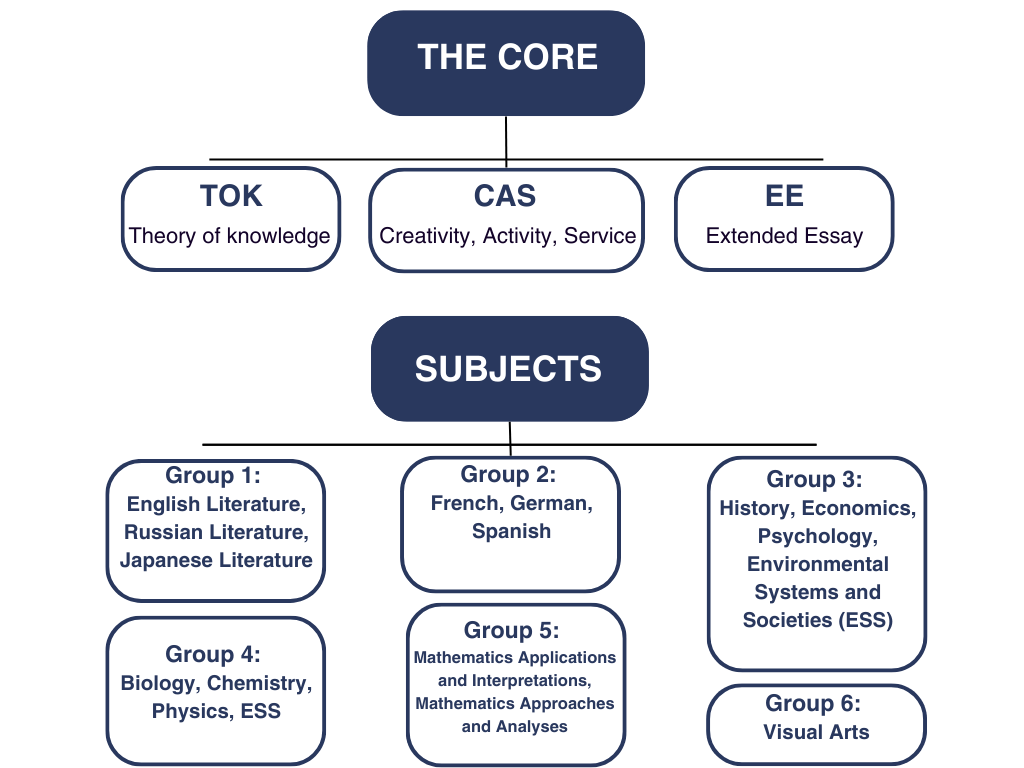
Find the hardest IB Diploma subject combinations, understand what makes them challenging, and learn how to choose a tough but sustainable course lineup.

Choosing IB Higher Level vs Standard Level subjects is crucial. Learn five expert considerations on workload, university requirements, and IB grading to make the right choice.

Choosing your IB subjects is key. Learn how to align your choices with university course requirements and career aspirations to keep your options open and succeed in the IB Diploma.
Learn how to choose the right IB subjects with our strategic playbook. Discover university requirements, HL vs SL workload, and our expert interest audit.
600+ handpicked tutors from across the world with the best background and experience.


Geography shouldn't limit your potential. Lanterna provides premium online IB tutoring across the world, being partners with 250+ IB schools worldwide. Our country guides explore how the IB landscape shapes up and how our tutoring supports it perfectly.

1 hour of online tutoring in any subject with a 40+ IB graduate who scored a 7 in your subject.
No strings attached. By filling out the form you accept our T&Cs.
We are IB experts committed to achieving your academic goals.