
Graduates
- Scored 40+ in the IB and 7s in the subjects they teach.

IB vs. A-Levels vs. AP: Compare core differences in curriculum, assessment, and university recognition to choose the right pre-university path for your goals.

Choosing your path for the final two years of school is one of the biggest academic decisions you'll make. It’s not just about getting into university, but about what kind of student you want to be when you get there. The three big players on the global stage are the IB Diploma, A-Levels, and AP courses. Let's break them down, tutor-style, to figure out which one fits you best.
Before we dive deep, here’s a quick snapshot of how these three qualifications stack up against each other.
| Feature | IB Diploma Programme | A-Levels | Advanced Placement (AP) |
|---|---|---|---|
| Philosophy | Holistic and broad. Aims to develop well-rounded, critical thinkers with a global perspective. | Specialized and deep. Aims to build expert knowledge in a few chosen fields. | Flexible and à la carte. Aims to provide college-level experience and potential university credit. |
| Structure | Rigid. 6 subjects across different disciplines (3 HL, 3 SL) plus a mandatory core. | Focused. Typically 3-4 subjects of your choice, studied in great depth. | Customizable. Take as many or as few individual courses as you and your school see fit. |
| Core Requirements | Yes. Extended Essay (EE), Theory of Knowledge (TOK), and CAS (Creativity, Activity, Service). | No core requirements. The focus is purely on the chosen academic subjects. | No core requirements. Each course is a standalone qualification. |
| Assessment | A mix of final exams and internal assessments (coursework) moderated by the IB. | Primarily based on high-stakes final examinations at the end of two years. | A single, standardized external exam at the end of each course in May. |
| Best For... | Students who want a balanced, challenging education and want to keep their university options open globally. | Students who have a clear idea of what they want to study at university and prefer deep specialization. | Students (primarily in the US system) seeking flexibility to challenge themselves in specific subjects and earn college credit. |
Now let's look at the personality of each program. Where do you see yourself thriving?
The IB is a two-year marathon that pushes you in every direction. You can't just be a "maths person" or a "history person"—you have to be both. You’ll study six subjects, write a 4,000-word university-level research paper (the EE), take a philosophy course that questions how you know what you know (TOK), and engage in projects outside the classroom (CAS).
If you know your passion lies in the sciences, or the humanities, or the arts, A-Levels let you ditch the subjects you don't love and go deep into the ones you do. By focusing on just 3 or 4 subjects, you develop a level of expertise that can give you a real head start in your university major.
The AP system offers a buffet of college-level courses. You can take AP Calculus to prove your math skills, AP Art History to explore a passion, and AP Psychology because it sounds interesting. There’s no set program; you and your school build a curriculum that suits your goals. The big prize is that a high score (usually 4 or 5) can earn you course credit at US universities.
Let's be clear: all three programs are excellent and can get you into the world's best universities. The right choice depends entirely on your learning style and goals.
While A-Levels create specialists and APs offer flexibility, the IB Diploma is uniquely designed to create successful university students. The skills you learn from the Core are the difference-maker. The Extended Essay teaches you how to conduct independent research and write a long-form academic paper—something most students don't experience until their second year of university. TOK teaches you to think critically and evaluate sources, the bedrock of higher education. CAS ensures you're a balanced human being, taking care of your needs, not just an academic machine.
Ultimately, the IB doesn't just prepare you to get into a top university; it prepares you to excel from the moment you step on campus. It's the ultimate university preparation, and that's an advantage that lasts a lifetime.
IB MYP vs. GCSE: Is the Middle Years Programme right for your child? Our parent's guide explains the IB MYP curriculum, assessment, and comparison to the GCSE system.

Understand the key differences between A-levels and IB. Learn about subject load, specialisation, mandatory research (Extended Essay/EPQ), and UCAS points conversion.

IB vs A-Level: Discover which diploma sets you up best for university acceptance, higher grades, and better career prospects, based on HESA student data.
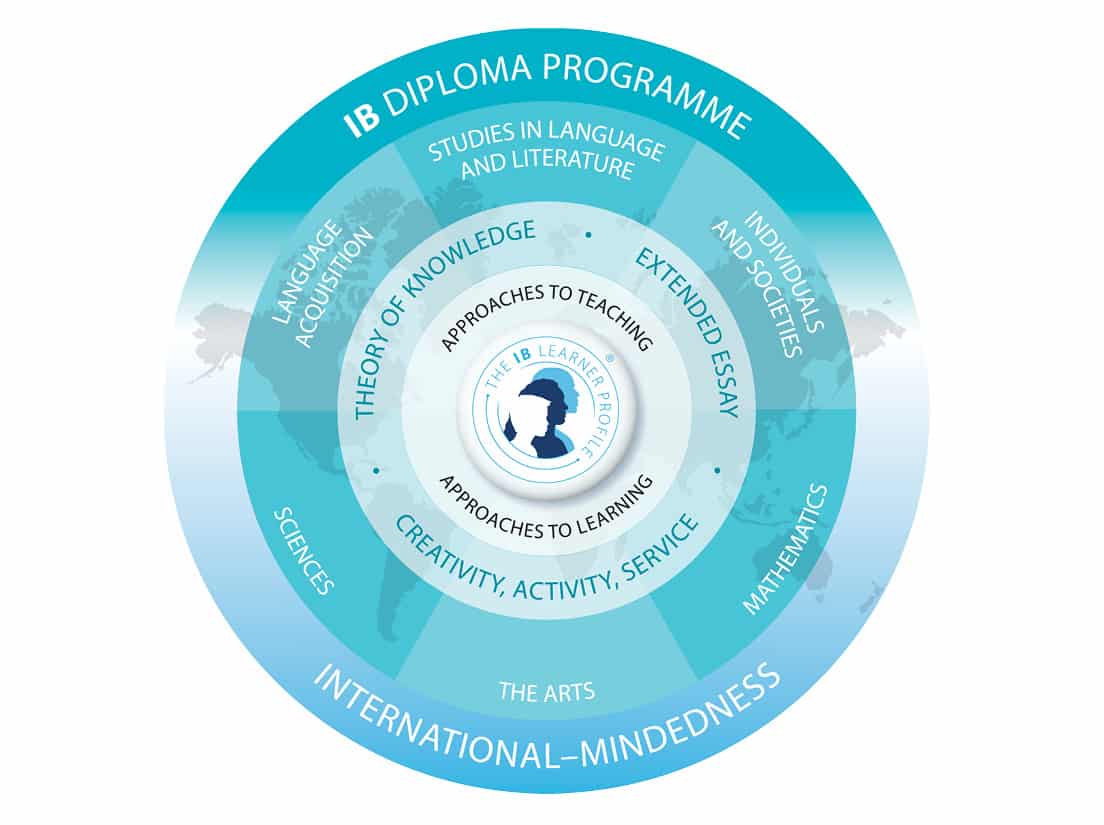
Deciding on the IB Diploma? Learn 5 key reasons why choosing the IB prepares you for university success, fosters independent thinking, and keeps your options open.

Choosing IB subjects? Align your HL/SL choices with university requirements & career goals. Our strategic guide helps you avoid common mistakes for IB success.

Ultimate IB Program Guide: Explore PYP, MYP, & DP. Get clarity on benefits, workload, and global university recognition for students. Free guide from IB 7 grads.
Understand the IB Diploma Programme curriculum, subjects, and core elements (CAS, TOK, EE) with this expert guide. Learn how IB assessments and grading work.

Understand the International Baccalaureate (IB) program: its diploma structure, core components (Extended Essay, CAS, TOK), curriculum, and benefits for university success.
600+ handpicked tutors from across the world with the best background and experience.


Geography shouldn't limit your potential. Lanterna provides premium online IB tutoring across the world, being partners with 250+ IB schools worldwide. Our country guides explore how the IB landscape shapes up and how our tutoring supports it perfectly.

1 hour of online tutoring in any subject with a 40+ IB graduate who scored a 7 in your subject.
No strings attached. By filling out the form you accept our T&Cs.
We are IB experts committed to achieving your academic goals.