
Graduates
- Scored 40+ in the IB and 7s in the subjects they teach.

Understand the IB Diploma Programme curriculum, subjects, and core elements (CAS, TOK, EE) with this expert guide. Learn how IB assessments and grading work.
What is the IB Diploma Programme? Who are the IB? If you’re looking for the answers to these questions because you’re interested in IB DP1, you’re on the perfect page!
As IB graduates, we know there are loads of myths and fake news about the IB Diploma programme that can confuse (and scare!) students. This internationally recognised programme is challenging, but it’s not as terrifying as some make it out to be. Yes, it’s hard work, but the coursework helps prepare students to transition from school to higher education. Plus, it helps students develop a range of handy skills.
So, the tutors at Lanterna Education are here to unpack what you can expect during the DP1 and give you all the answers so you can make an informed decision about your studies.
Scroll down to learn about the IB, how the DP curriculum works, and how it prepares you for university and life after your studies!
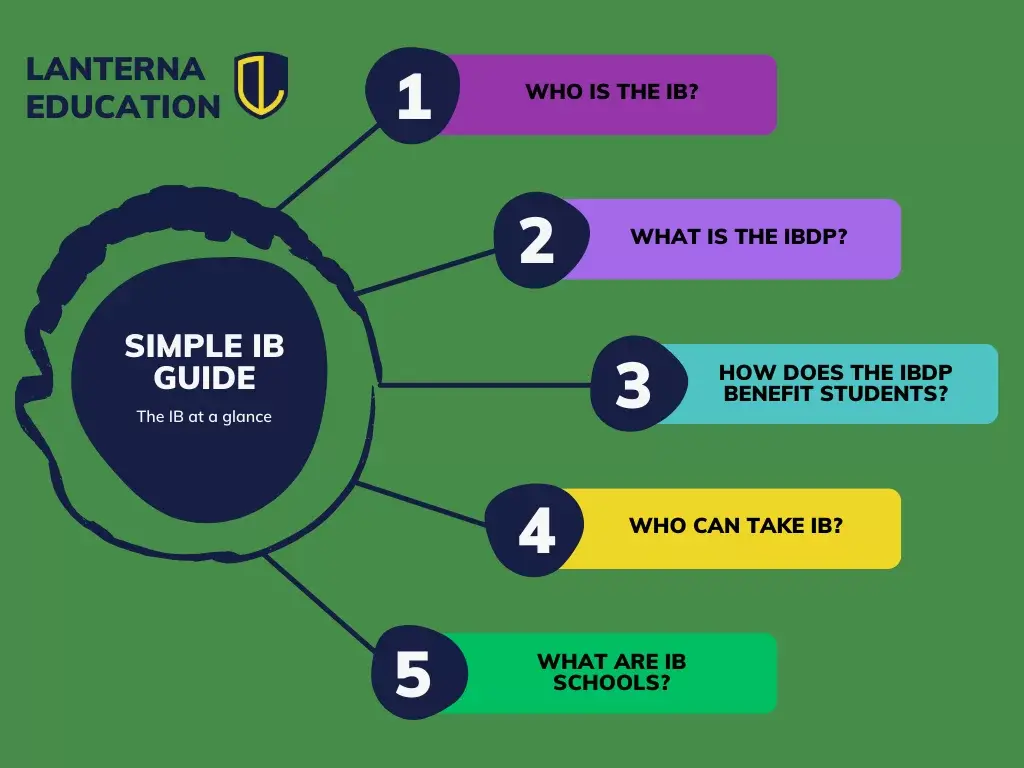
Originally known as the International Baccalaureate Organisation (IBO), the IB (International Baccalaureate) is a nonprofit organisation that began in 1968 to provide quality educational programmes to students between 3 and 19 years old.
Today, the IB offers globally recognised programmes to help young people around the world prepare for university and build the skills needed to succeed throughout their studies and lives.
Created for young people aged 16 to 19, the IB Diploma Programme (IB DP) is one of four optional secondary education programmes developed and offered by the International Baccalaureate (IB). The two-year programme (often called DP1 and DP2) has a globally recognised syllabus that allows high school students to progress academically, develop their creative thinking and earn an internationally renowned IB Diploma.
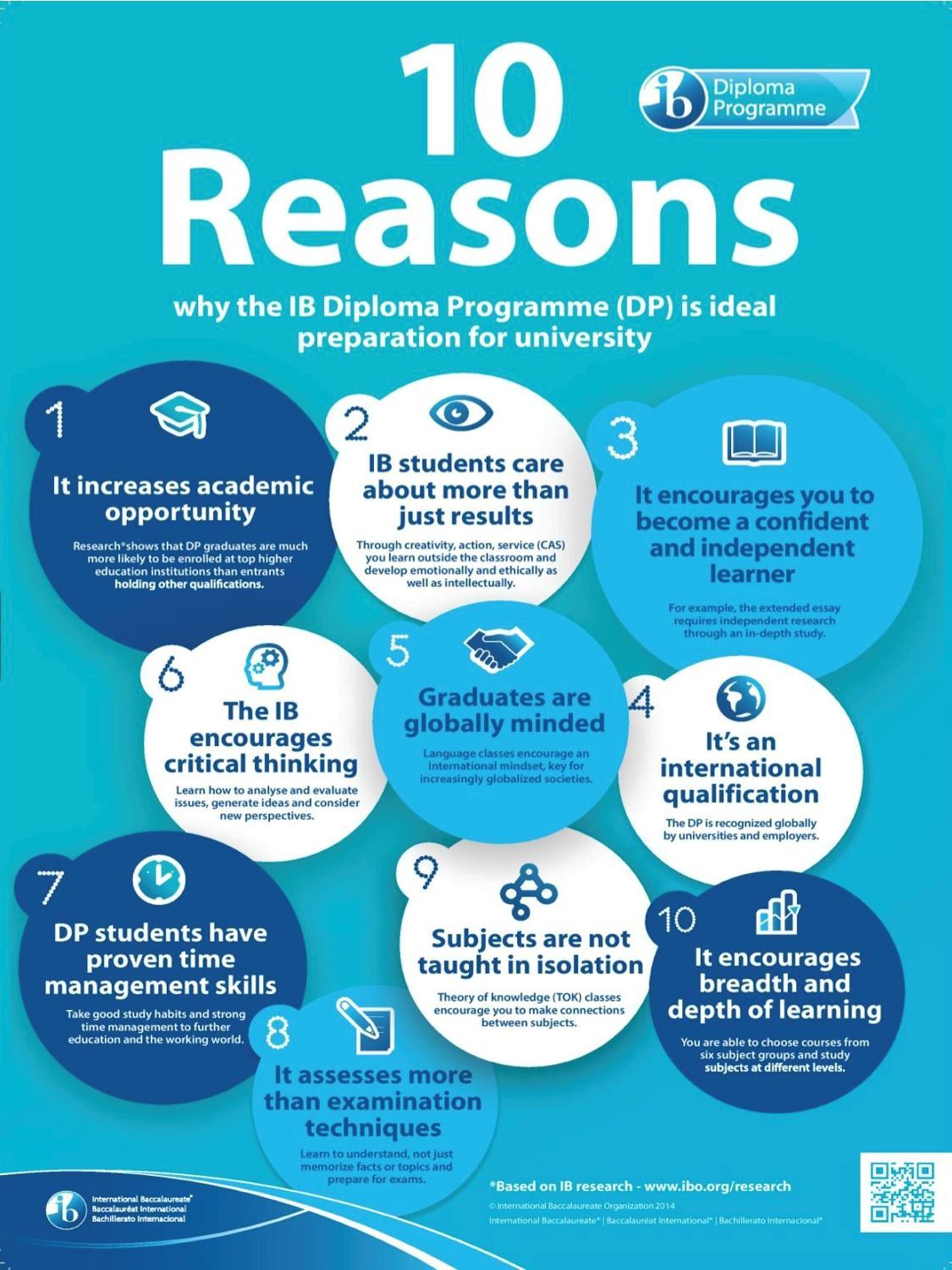
Ivy Leagues and the world’s leading universities accept IB Diploma certificates, making the university application process much easier. But the IB’s academically challenging programme doesn’t only show commitment and look great on university admission applications!
The IB syllabus also prepares students for higher education. The programme ensures that students graduating with the IB Diploma have the tools to succeed academically and build rewarding careers. Here are a few of the many benefits the IB Diploma programme offers:
Yes! The great thing about the IB Diploma is that any student aged 16 to 19 around the world can choose to take the programme. However, only an IB School (or educational institutions with IB approval) can offer their students access to the full IB Diploma Programme and certificate.
It may sound complicated, but IB Schools are just educational institutions with the International Baccalaureate’s permission to offer their programmes to its students.
In fact, almost any international school can apply to become an IB School and join a global school community of over 5,000 schools around the world offering the IB curriculum, DP subjects, exams and IB Diploma qualifications.
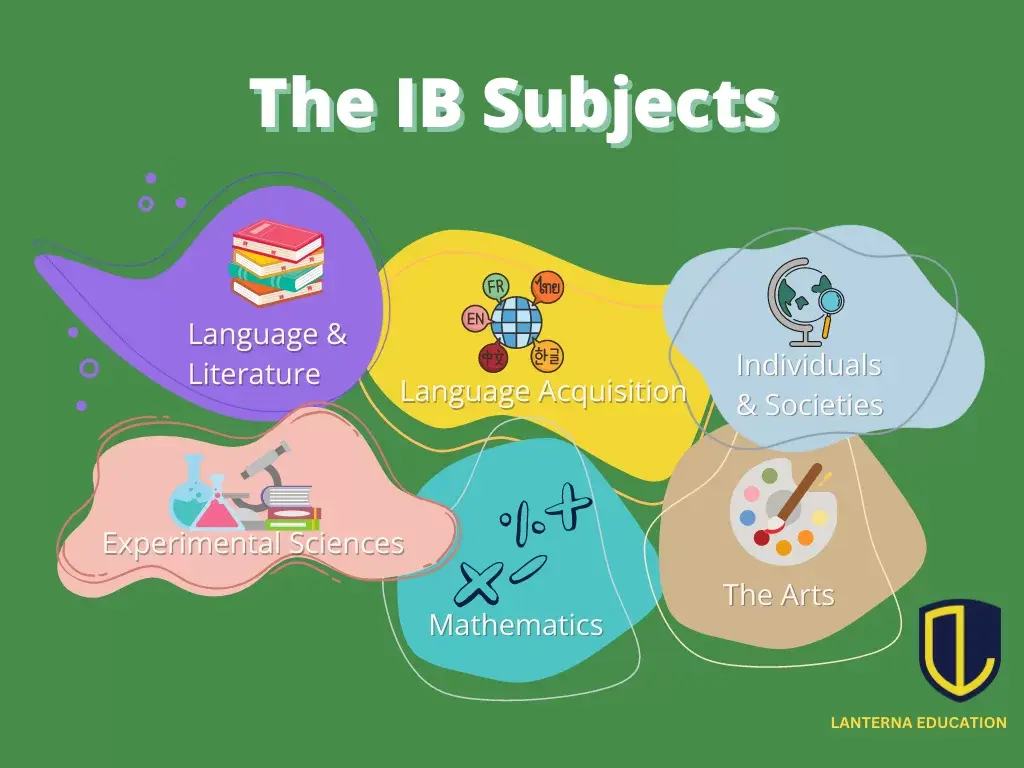
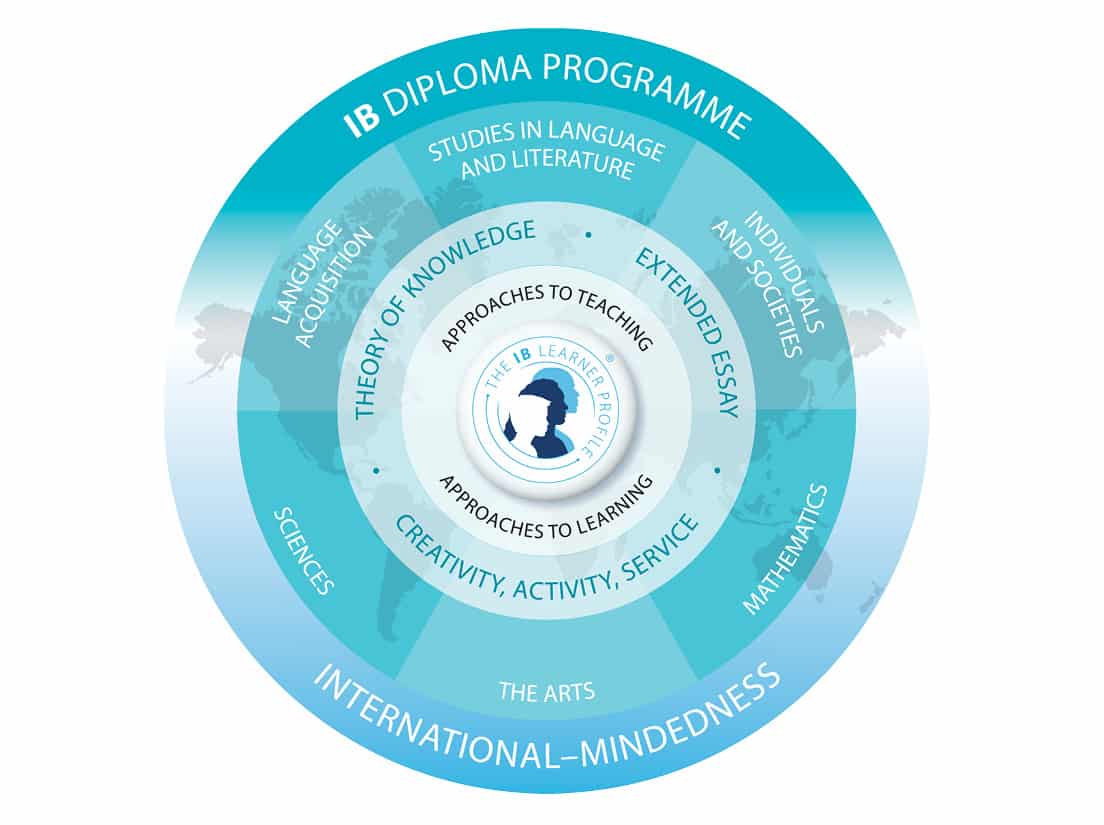
The IB Diploma Programme curricula has six subject groups and three mandatory core elements that Diploma Programme (DP) students must complete over two years to earn their International Baccalaureate (IB) Diploma certificate.
It sounds like a lot, and the programme is demanding. But its structure also allows flexibility, and each of the required components and six subjects are excellent preparation for future study at universities and other higher education institutions.
Each of the subject groups in the International Baccalaureate (IB) Diploma programme offers different courses. However, it’s important to remember that some countries and IB Schools may set mandatory subjects and different languages for students based on the national curriculum and available resources.
The International Baccalaureate (IB) Diploma programme offers the following subject groups:
IB DP students must pick one subject from each of the subject groups, three of which must be Higher level (HL) and three must be Standard level (SL).
The IB Diploma Programme (DP) requirements include:
Standard-level subjects require 150 hours of teaching, while Higher level subjects
need 240 hours of study. IB Higher level (HL) and Standard level (SL) courses also have different scopes but use the same grade descriptors.
Both subject levels require students to learn and display their understanding of a topic; the only difference is that Higher level (HL) subjects expect students to show a greater depth of knowledge, understanding and range of skills.
It all depends on the course! Languages, Sciences, Mathematics and Social Sciences are mandatory for all students, but students may take additional courses instead of studying the arts.
So you can select an extra Science, Language or Individuals and societies to replace the arts and meet the IB’s of six subject requirements.
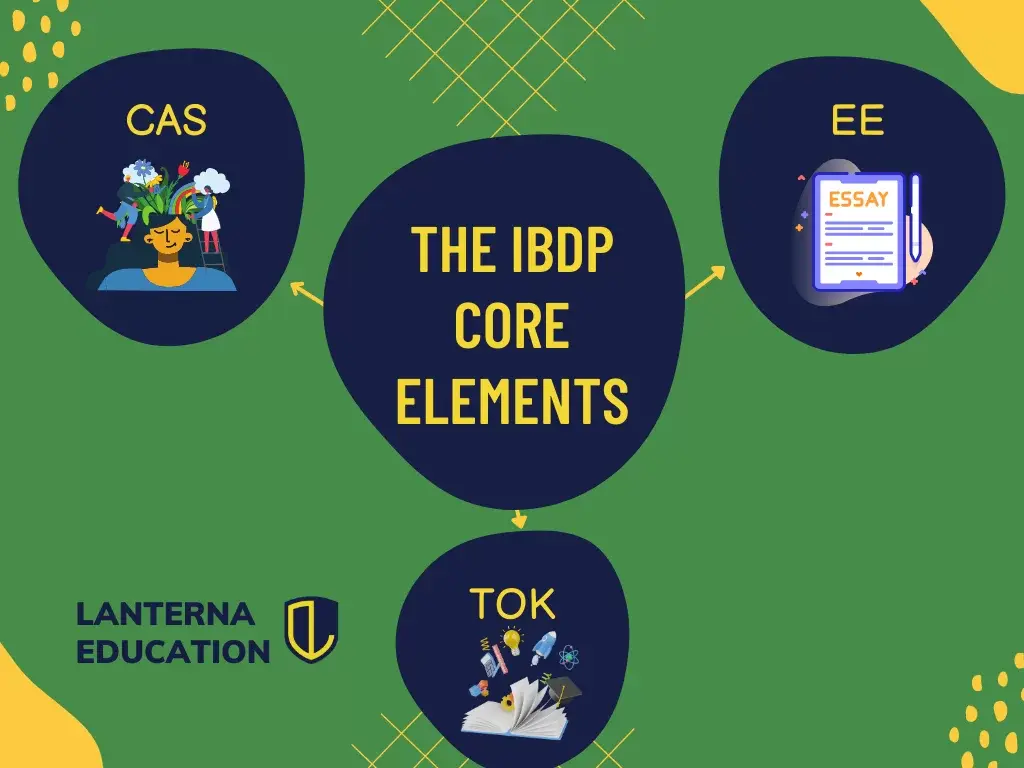
The IB Diploma programme’s three core elements aim to broaden student’s education. Each project provides opportunities and challenges where students can apply their skills and knowledge.
The three DP core elements in the Diploma Programme are:
1) CAS
CAS stands for Creativity, Activity Service. CAS projects combine a range of activities with academic study to develop a student’s personal and social skill sets and creative thinking. Creativity, Activity and Service projects are flexible and focus on students learning new skills through different activities. For example, Creativity can include learning photography or playing a new instrument; Activity can be a physical activity like learning to cook, and Service CAS can be acts of community service or volunteer work.
2) TOK
TOK means Theory of Knowledge, and these projects focus on developing critical thinking skills and learning across a student’s chosen theory subjects. Theory of Knowledge assignments challenge DP students to explore and reflect on the nature of knowledge and make students reflect on how they know something.
3) EE
EE is an extended essay that requires DP students to formulate a research question, conduct research to support an argument and submit a 4000-word document at the end of the project. By allowing students to do independent research on a topic of personal interest, the IB extended essay project provides opportunities for students to improve communication, develop evidence-based arguments and explore their interests.
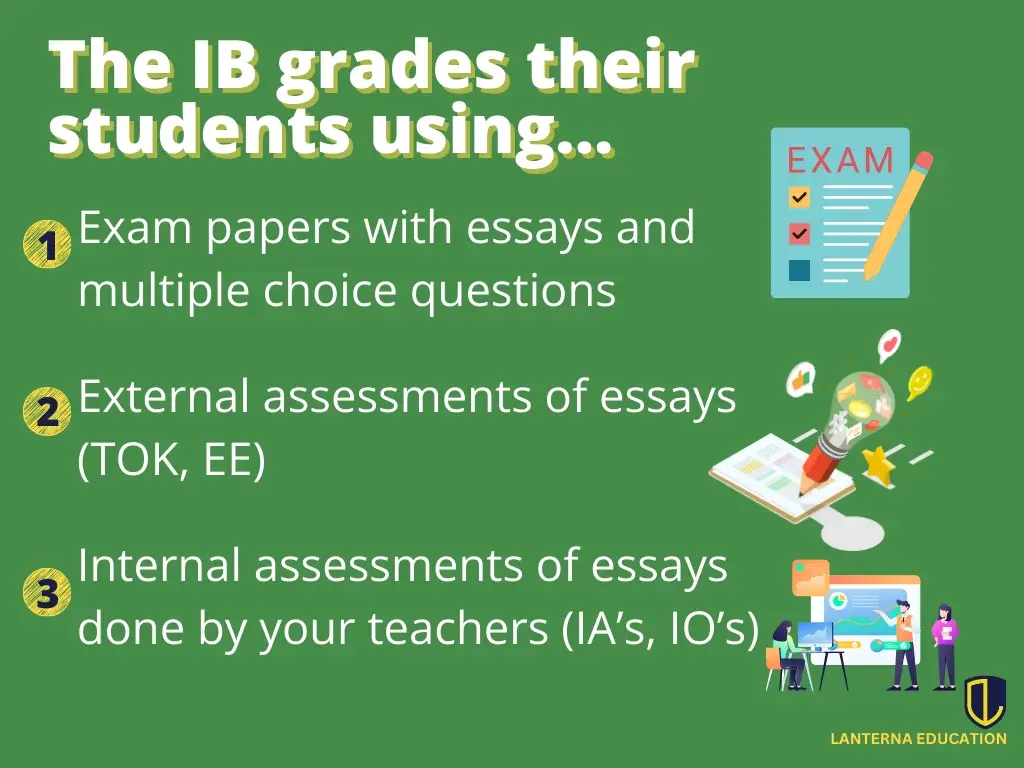
The International Baccalaureate (IB) calculates grades and results based on a set minimum standard of performance for Theory of Knowledge projects, Extended Essays and Creativity, Activity Service projects.
The IB gives students goals for their coursework, and they use student work as evidence of their progress and achievements over the two-year Diploma programme.
The IB marking criteria for students includes:
The IB uses external and internal assessments to review students’ progress. However, final examinations are the most common type of assessment for IB courses because they are reliable assessment methods, and they ensure all students use a standard level of testing no matter which countries or areas they live in.
IB final exams often include:
Several programme areas use externally assessed coursework that allows IB students to work over an extended period while taking responsibility for their own learning and conducting their own research while supervised by appointed teachers. These assessments then go to external examiners for marking.
IB External assessments include:
Most courses have internal assessments (IAs) too. IAs are research-based assignments for each subject that students complete during the IB Diploma course’s second year (DP2). Student’s teachers grade these assignments and send samples to independent moderators to approve or change based on the work they receive.
Internal Assessments (IAs) include:

Lanterna Education tutors have years of experience helping students reach their full potential and get the marks they need to enter top universities worldwide.
We would love to help you! Check out our one-on-one tutoring with experienced tutors. We provide Free revision advice, resources, and study guides for students in the IB Diploma programme.
Good luck! We hope we’ve helped you understand the IB DP and busted any myths that may have stopped you from choosing the IB and reaching accademic success.

Master the IB Diploma's two-year journey with our complete timeline. Get key deadlines and guidance for the Extended Essay, TOK, IAs, and CAS from DP1 through final exams.

Ultimate IB Program Guide: Explore PYP, MYP, & DP. Get clarity on benefits, workload, and global university recognition for students. Free guide from IB 7 grads.
A complete guide to the IB Diploma Programme. Understand its core components (TOK, EE, CAS), subject groups, and grading system. Learn why the IB offers outstanding preparation for university.
IB Diploma Benefits for Parents: Justify the hard work with our guide on university preparation and essential skill development for a successful future.

Debunked: The truth about common IB Diploma myths ("IB is impossible," "no social life"). Get factual reassurance and reduce anxiety with this free guide from IB 7 grads.

Understand the International Baccalaureate (IB) program: its diploma structure, core components (Extended Essay, CAS, TOK), curriculum, and benefits for university success.

Prepare for the IB Diploma with these top 10 tips from an expert tutor. Learn how to assess subjects, improve study habits, and stay organized for success.
Deciding on the IB Diploma? Learn 5 key reasons why choosing the IB prepares you for university success, fosters independent thinking, and keeps your options open.
600+ handpicked tutors from across the world with the best background and experience.

Geography shouldn't limit your potential. Lanterna provides premium online IB tutoring across the world, being partners with 250+ IB schools worldwide. Our country guides explore how the IB landscape shapes up and how our tutoring supports it perfectly.

1 hour of online tutoring in any subject with a 40+ IB graduate who scored a 7 in your subject.
No strings attached. By filling out the form you accept our T&Cs.
We are IB experts committed to achieving your academic goals.