
Graduates
- Scored 40+ in the IB and 7s in the subjects they teach.

Master IB CAS reflections, projects, and interviews with this essential guide from an expert IB tutor. Learn how to meet the 7 Learning Outcomes and secure your diploma.

Reflections, learning outcomes, CAS Projects and interviews. These are the basics of CAS, and they confuse just about every new IB student equally. How do you write reflections? What makes a good CAS project? Why do you need to be interviewed? In this post, I will try to draw from my experience as an IB student and as a tutor to answer these questions and give a comprehensive overview of CAS so you can feel confident dealing with it. This post takes a holistic view at this IB core constituent, with the little gold nuggets of information that made my CAS career considerably more relaxed.
I won’t bloat this blog post (and, frankly, bore you) by listing all seven learning outcomes. You can check them out here if you want to see them all. Instead, I will walk you through a few examples of the learning outcomes and pair them with a CAS activity. Let’s take the learning outcome:
4. Show commitment to and perseverance in CAS experiences
This learning outcome lends itself to long-term CAS activities. Think of all the things people usually say they will do as a new year's resolution but cannot commit to doing for a long time and rarely persevere. By achieving this learning outcome, the IB wants you not to be the person that gives up after a week or two but to stick with it even when your motivation dwindles! A good example could be going to the gym. You will most likely start going with excitement in the early days, but you really have to push yourself to keep going after one or two months—this learning outcome pairs like wine and cheese with learning outcome:
1. Identify your own strengths and develop areas for personal growth
And hey, since we are on the topic of long-term activities, we can smoothly segue into the CAS project.
The basics of the CAS project are reasonably straightforward. It is, however, too often forgotten and left to the last minute. It is a collaborative project that lasts for a month or longer. The keyword here is collaborative. Going to the gym alone for a month or more won’t cut it. Going to the gym with a group you have organised? Well, that is the embodiment of a perfect CAS project (that, by the way, perfectly targets learning outcome 3, which focuses on planning and initiative).
You must complete at least one of these projects to pass CAS—which you must do to get your diploma, by the way! Students often mix these with learning outcomes 6 and 7—the ones that deal with actions of global significance and ethics—by joining a local volunteer group like Red Cross or Amnesty. See if there is anything like that nearby you can help and get some service hours out of! A lot of students will do more than one CAS project, too.
As long as it’s either a creative, active or service-oriented pursuit, virtually anything can be a CAS project. You just have to pair it up with a fitting learning outcome and demonstrate how you have achieved those learning outcomes in the reflections (we will get to those in just a second). Videogames, cat-sitting and running a YouTube channel or Instagram account are all not unheard of CAS activities. Anything where you can develop as a person and target one of the seven learning outcomes will do just fine. You just need to think about it the right way and show that you are developing in your reflections.
The most important thing to remember when writing your reflections is to explicitly address how you achieve the learning outcome the activity is targeting. Let’s go back to our example of going to the gym and targeting learning outcome #4. You want to write how you commit to going regularly, and honestly address your struggles with that. You do not need to exaggerate the truth. Being honest about what is difficult and what you can do about it is an excellent demonstration of introspection!
The last thing I will touch on, for now, is the CAS interviews. There are three of these, and you might be wondering why? Fair question!
And that’s about it; a comprehensive overview of the basics you should know for CAS and a few tips and tricks. Hopefully, they are of some use to you.

Find your perfect IB CAS project with our expert list of 50+ ideas. Explore examples for Creativity, Activity, Service, and combined projects to inspire you.
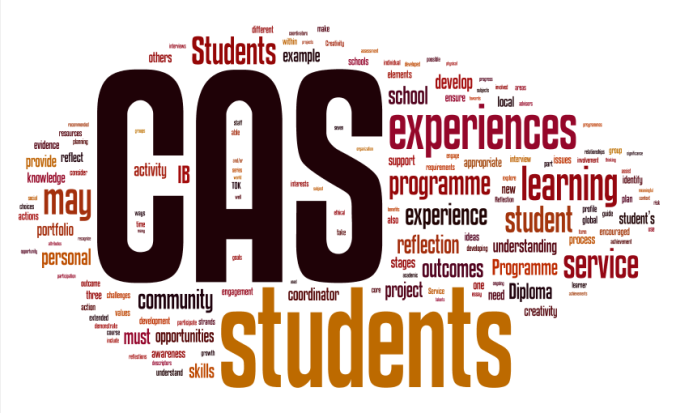
IB CAS Guide for Parents: Understand Creativity, Activity, Service and learn how to help your child brainstorm ideas and manage logistics without taking control.

What is CAS in the IB Diploma Programme? Get a complete overview of Creativity, Activity, Service, the three essential core elements all students must complete.

Stuck on your IB CAS Project? Get inspiration from 50 expert-curated IB CAS Project ideas and examples covering Creativity, Activity, and Service strands.
Master your IB CAS reflections with this complete guide. Learn what to include, methods of reflection, and how to build your crucial CAS portfolio for the IB Diploma.

Find 100 Easy IB CAS Ideas: Creativity, Activity, Service inspiration from top IB experts. Make CAS fun and manageable alongside your IB studies.

Need inspiring IB CAS Ideas? Learn how to start strong and keep your portfolio growing with 50 creative, fun, and achievable Creativity, Activity, Service examples.

Learn how to make the most of your IB CAS experience with expert advice. Get inspiring ideas for Creativity, Activity, and Service projects to fulfil your Diploma requirements.
600+ handpicked tutors from across the world with the best background and experience.


Geography shouldn't limit your potential. Lanterna provides premium online IB tutoring across the world, being partners with 250+ IB schools worldwide. Our country guides explore how the IB landscape shapes up and how our tutoring supports it perfectly.

1 hour of online tutoring in any subject with a 40+ IB graduate who scored a 7 in your subject.
No strings attached. By filling out the form you accept our T&Cs.
We are IB experts committed to achieving your academic goals.