
Graduates
- Scored 40+ in the IB and 7s in the subjects they teach.

Master IB Theory of Knowledge Frameworks. Learn how to apply the structure of the Areas of Knowledge (AoKs) in your essays and presentations for top results.
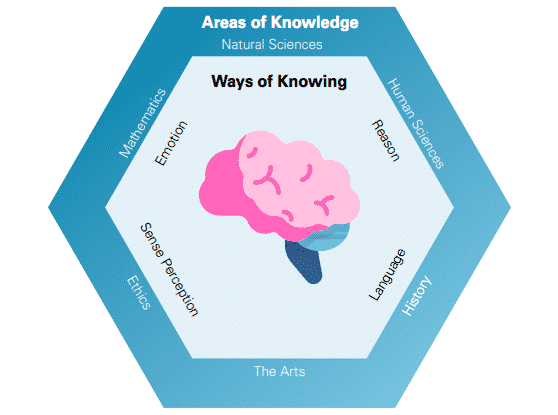
The Ways of Knowing, which we explored in the previous blog posts, are about how we know things.
The Areas of Knowledge are a bit different; these are about what we know and how we produce knowledge.
You might remember that there were eight different Ways of Knowing. There are 8 Areas of Knowledge too:
Each Area of Knowledge is a system, for example, the scientific Area of Knowledge. Within the scientific system, there are agreed ways to investigate things, and there are also agreed standards of proof and argument that are different in each Area of Knowledge.
So we can think of an Area of Knowledge as a body of knowledge that seems to fit together in one system. This system helps produce knowledge during our human life and acts as a knowledgeable guide with an ethics focus within the natural world.
You might notice that the AoKs look like the subjects you take in the IB, and it seems this way because the Areas of Knowledge are how we categorise our knowledge. The AOK is similar to dividing up the IB and dividing up the different subject areas.
Theory of Knowledge is at the centre of the IB. You should feel free to draw in material from any subjects during ToK discussions.
Before we dive into talking about the Areas of Knowledge, we will talk about Knowledge Frameworks. These are the tools we use to think about the different Areas of Knowledge, and they can be accommodating to show that you know your stuff in your work.
Each Area of Knowledge is massive, containing a vast amount of information. Let’s take history as an example; the volume of information historians have discussed is phenomenal!
Thankfully, you do not need to think about everything that has happened in the history of human beings to be able to talk about it in ToK. Instead, you need to know about how the subject works.
That is what the theory of knowledge is interested in. Not the content of the subject/AoK, but how it works.
The way a subject works can include many things. You might ask questions like what motivates historians to learn? What methods do they use to discover historical information? You might even ask about the point of history or its real-world applications.
It involves understanding the cognitive and material tools and socially established methods for a subject. It is intended to help you gain knowledge on historical perspectives.
Asking questions like this lets us understand the structure of an Area of Knowledge like history. This basic structure is called a ‘knowledge framework.’
It is named this way because it explains how history works – it gives us an outline of the subject without all the content. You should be able to see how having a basic understanding of how history works is vital to understanding that Area of Knowledge.

We can understand the general structure and features of each AoK by asking about certain things. Each one talks about features that all AoKs have. All areas of knowledge have different methods of discovery. Think about how these things apply to the scientific AoK. Doing this with an AoK can give you a solid understanding of how AoK works.
The elements of the AoK are:
Thinking about the above bullets lets us create a knowledge framework to understand each AoK.
These are extremely useful for your essays and presentations, and they allow you to ask the right questions about the knowledge you are considering.
Scope means ‘what does the AoK include’? It encourages us to ask: out of all human knowledge, what does this Area of Knowledge include, and what is not a part of it. You might ask yourself, how much about reality can science tell us?
Think about the scope of the AoK that you enjoy. It might involve a few different formal disciplines and different moral values, a new scientific method, or epistemic values.
It would help to consider why people pursue knowledge in that AoK and its uses in people’s lives.
Language is essential in many ways when discussing the Areas of Knowledge. Considering the role of language in each AoK is an excellent way to evaluate that subject critically. You might think that language is just a tool of communication, and however, this is not necessarily the case.
There is a debate about the role language plays in constructing our knowledge. Some would argue that language is vital and that we have practically no ability without it. You might, however, say that knowledge exists and that language is simply a way to communicate or express this.
Some people take a middle ground, arguing that language allows us to name existing concepts. However, if we did not have a language, we would not be able to get past these simple ideas to more complex human thought.
Deciding where you stand in such debates will allow you to take a strong position in any ToK discussion or work.
You would need to connect this up with ideas about shared knowledge. What does this tell us about language in each AoK? How do different cultural groups deal with historical development?
One example might be practical problems for a particular culture during history. They may have a good explanation for why these historical perspectives are a specific way and how they used material tools to overcome the challenge.
One of the key differences between the AoKs is that they use different ways to seek knowledge. Thinking about these different methods will help you understand how the AoKs are all different from each other. To show you are a top ToK student, you should consider the assumptions that underlie the methods used to discover knowledge.
Different AoKs think different methods are more important than others. In essays, ask these questions:
These questions are a good starting point for breaking down how the AoK works.
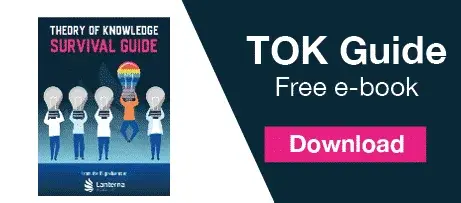
Areas of knowledge aren’t fixed, and science, art, and history are different from hundreds of years ago. This reflects the fact that ability is not seen as unchanging, and it is what we call ‘provisional,’ meaning it is flexible and changes.
Historical and technological developments are ways to approach knowledge and understand knowledge produced over time. You can always add optional themes within each subject.
Shared personal knowledge is something we discussed in a previous post. You might recall that individuals contribute to shared knowledge when discovering or creating new things.
The other side of this coin is that shared knowledge can impact how we see the world. A scientist might see the world differently from a philosopher, for example.
When you think about the different Areas of Knowledge, it is essential to think about the impact this can have on individuals. Also, consider the effect of an Area of Knowledge on your thinking.
Do you think that studying different subjects throughout the school has changed how you feel? When writing a ToK essay, consider the perspective a person may have and how this can be influenced by the AoK they rely on in their thinking.
Well done on making it through this far!
If you have understood most of this material, you’re doing well. If you can apply it in your ToK work, then that is the next step to being super successful in ToK. Remember that knowledge questions relating to shared and personal knowledge and ethical considerations are important in your final work. If you’re looking for personalised support to master Theory of Knowledge or any other part of the IB curriculum, explore our IB Tutoring services to connect with expert tutors who can guide you every step of the way.
The Lanterna Tip: Next time you think about an AoK, just run through the list above and comment on some of these items. Ask yourself the critical questions and think about how that Area of Knowledge works. You will be able to prove to everyone that you are a ToK Master! You will need to show your understanding of Tok concepts and that the methodologies employed are the correct ones.
Thinking about how things have changed in the AoKs will help you show that you understand this change. Consider how much science has changed in the last two hundred years. Perhaps it has not changed too much, but what about the history and practical problems that an individual knower may face?
Think about what it is that means these subjects change at different rates. This kind of discussion shows an understanding of the subtleties of ToK and will impress someone marking your work!
Remember, the marker wants to see your perspective and individual contributions, including deductive reasoning, a deeper exploration of a topic, good evidence to support your case, and an understanding different themes.

Learn how to master the IB TOK Areas of Knowledge. Expert guide to understanding the AoK framework, features, and key debates for your TOK essay.

Master the IB ToK Areas of Knowledge: Arts, Ethics, Religious Knowledge, and Indigenous Knowledge. Learn critical approaches and key concepts for ToK success.

Master the IB TOK Ways of Knowing with this expert guide. Learn how Imagination, Faith, Intuition, and Memory shape knowledge for your next essay.
Master the IB Ways of Knowing: Language, Sense Perception, Emotion, and Reason for ToK success. Learn how to ace your presentation and essays with expert tips.
Master IB Theory of Knowledge (TOK) with our complete guide. Learn about the curriculum, areas of knowledge, and ace your TOK exhibition and essay with structure tips and examples.
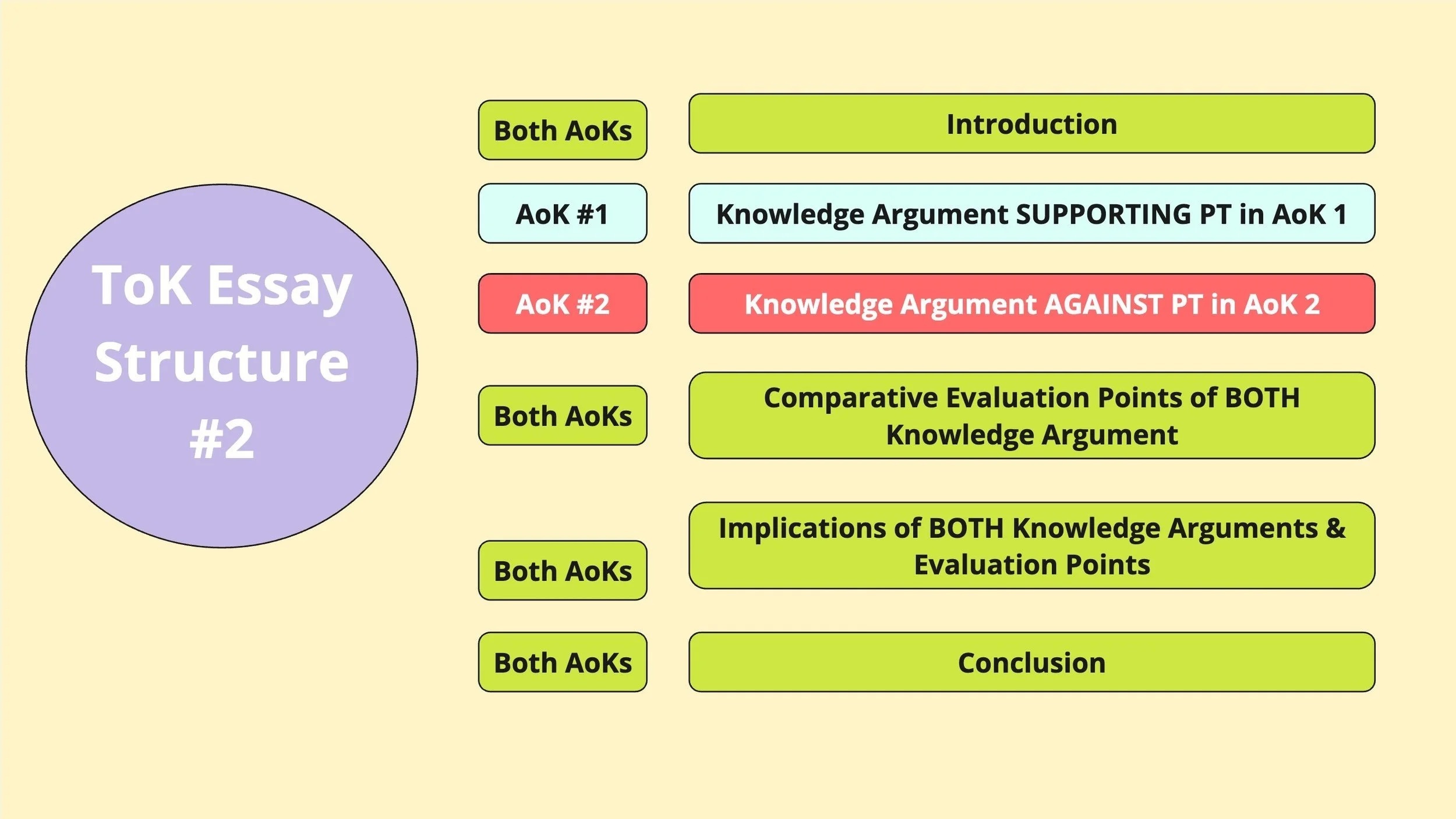
Master the IB TOK Essay structure with our complete guide. Get step-by-step outlines for your introduction, AOK paragraphs (claims/counterclaims), and conclusion to hit top markbands.
Learn how to get a top grade in IB ToK with expert tips covering Shared/Personal Knowledge, Ways of Knowing, and Areas of Knowledge. Achieve those crucial core points!

Master the IB TOK Essay with this complete expert guide. Learn how to structure your paper, understand grading criteria, and use critical thinking skills to achieve your diploma.
600+ handpicked tutors from across the world with the best background and experience.


Geography shouldn't limit your potential. Lanterna provides premium online IB tutoring across the world, being partners with 250+ IB schools worldwide. Our country guides explore how the IB landscape shapes up and how our tutoring supports it perfectly.

1 hour of online tutoring in any subject with a 40+ IB graduate who scored a 7 in your subject.
No strings attached. By filling out the form you accept our T&Cs.
We are IB experts committed to achieving your academic goals.