
Graduates
- Scored 40+ in the IB and 7s in the subjects they teach.

Confused by the new IB Maths courses? Learn how to choose between Analysis and Approaches and Applications and Interpretation at SL or HL with this expert guide.

Choosing what maths to study is confusing for many, you’re not alone! Whether you’ve chosen your maths class for next year or not, I thought it would be helpful to create a super simple guide to the new IB maths courses. Read on for an easy explanation!
You can choose between Maths: Analysis and Approaches and Maths: Applications and Interpretation. Both subjects will be offered at SL and HL. The SL maths courses mean 150 hours of classes, whilst a HL maths course is taught over 240 hours (remember, these class hours are spread over two years – phew!!!). Knowing the amount of time you’ll be spending on a subject is a good way to decide which level to take. Think to yourself: do I really want to have 240 hours of maths, or am I more suited to 150 hours? But what differentiates (maths joke, get it) the two courses is how they approach mathematics. Here’s a quick break down of the two subjects:
As I often tell pre IB students, when choosing your IB subjects it’s a great idea to think a bit further ahead to what you might want to study at University. So, when choosing which of these maths options (and at which level) to take, don’t be scared to approach your maths teacher or IB Coordinator for advice. If you have a subject or course in mind for University, ask for their opinion as to which maths option might be best!
Five topics will be covered in each of the new maths courses. These are:
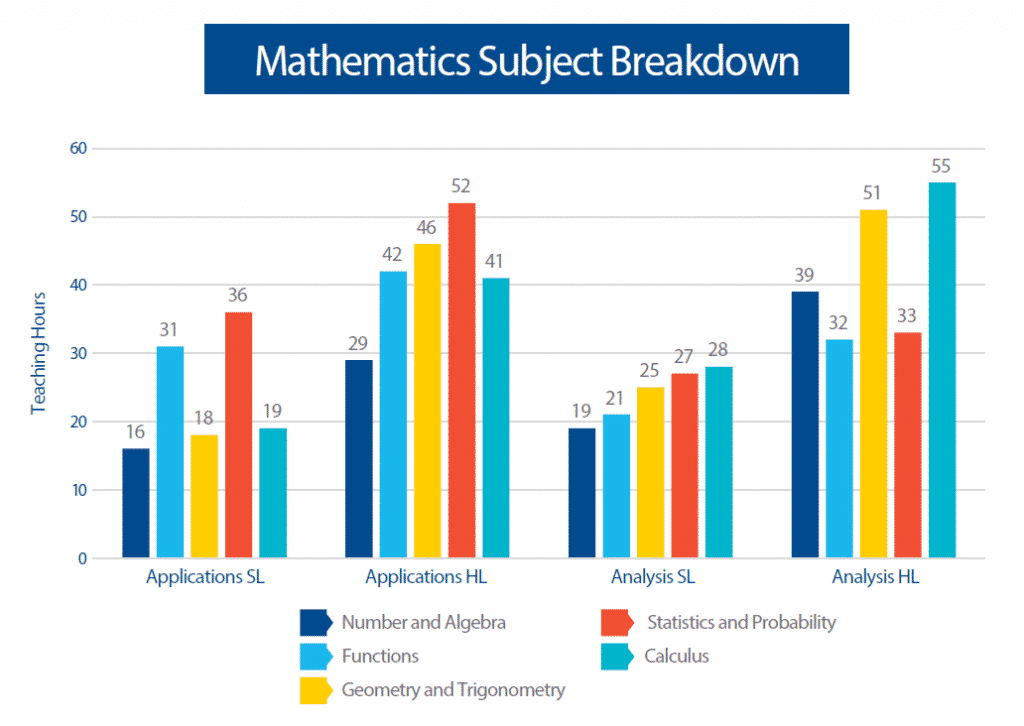
However, the emphasis on each of these topics varies depending on the maths course and what level you’re studying. This handy graph provides a summary of each course and its weighting of the five topics:
For more details on the maths subject breakdown, check out this blog from the IBO.
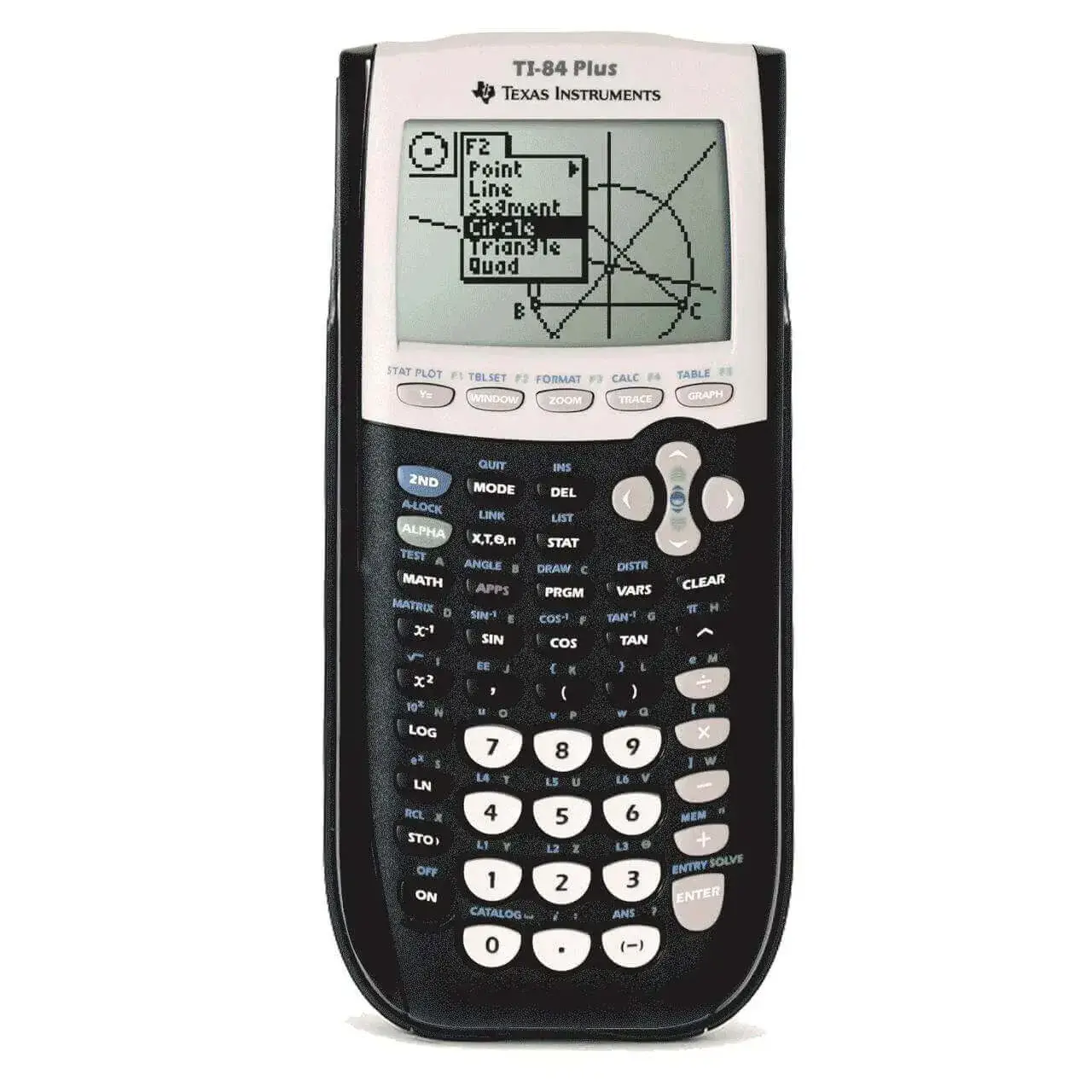
Some of you may have already come across the legendary GDC, also known as the graphic display calculator (or ‘the brick’ as I liked to call it). Well don’t you worry, because this bad boy is once again a requirement for the new maths courses. Get ready to lug this unnecessarily huge calculator around school for at least two years.
I hope this blog has given you a quick guide to the changes regarding the IB maths courses. If you’re still unsure as to which of the new courses is right for you, don’t hesitate to speak with your maths teacher or IB Coordinator. They should be able to help you make the right choice!
Choosing between IB Math AA vs AI? Our guide compares the syllabus, difficulty, and university prerequisites for both SL and HL. Make the best choice for your future.
.png)
Master your IB Math AA IA with this comprehensive guide. Find perfect topic ideas that allow deep mathematical exploration, expert examples, structure tips, and common mistakes to avoid for a 7-level score.
Struggling to find an IB Maths IA topic? Explore 50 proven Maths IA topic ideas, hand-picked by an IB expert to inspire your exploration and help you score highly.

Choosing IB Higher Level vs Standard Level subjects is crucial. Learn five expert considerations on workload, university requirements, and IB grading to make the right choice.

Choosing your IB subjects is key. Learn how to align your choices with university course requirements and career aspirations to keep your options open and succeed in the IB Diploma.

Learn how to choose your IB subjects wisely with 3 expert tips: think ahead for university, select HL/SL courses you enjoy, and check the IB syllabi for success.
.png)
Master your IB subject choices for university. Get strategic advice on crucial SL vs. HL differences and expert pathways for STEM, Business, and Humanities degrees.
Struggling with your IB Math AI IA? Our complete guide breaks down the marking criteria and structure. Find a great topic with our expert tips and successful examples.
600+ handpicked tutors from across the world with the best background and experience.

Geography shouldn't limit your potential. Lanterna provides premium online IB tutoring across the world, being partners with 250+ IB schools worldwide. Our country guides explore how the IB landscape shapes up and how our tutoring supports it perfectly.

1 hour of online tutoring in any subject with a 40+ IB graduate who scored a 7 in your subject.
No strings attached. By filling out the form you accept our T&Cs.
We are IB experts committed to achieving your academic goals.