
Graduates
- Scored 40+ in the IB and 7s in the subjects they teach.

Master the IB Computer Science IA Solution component with this essential Client Checklist. Includes a Client Interview Template and project roadmap for CS students (SL/HL) to meet success criteria.
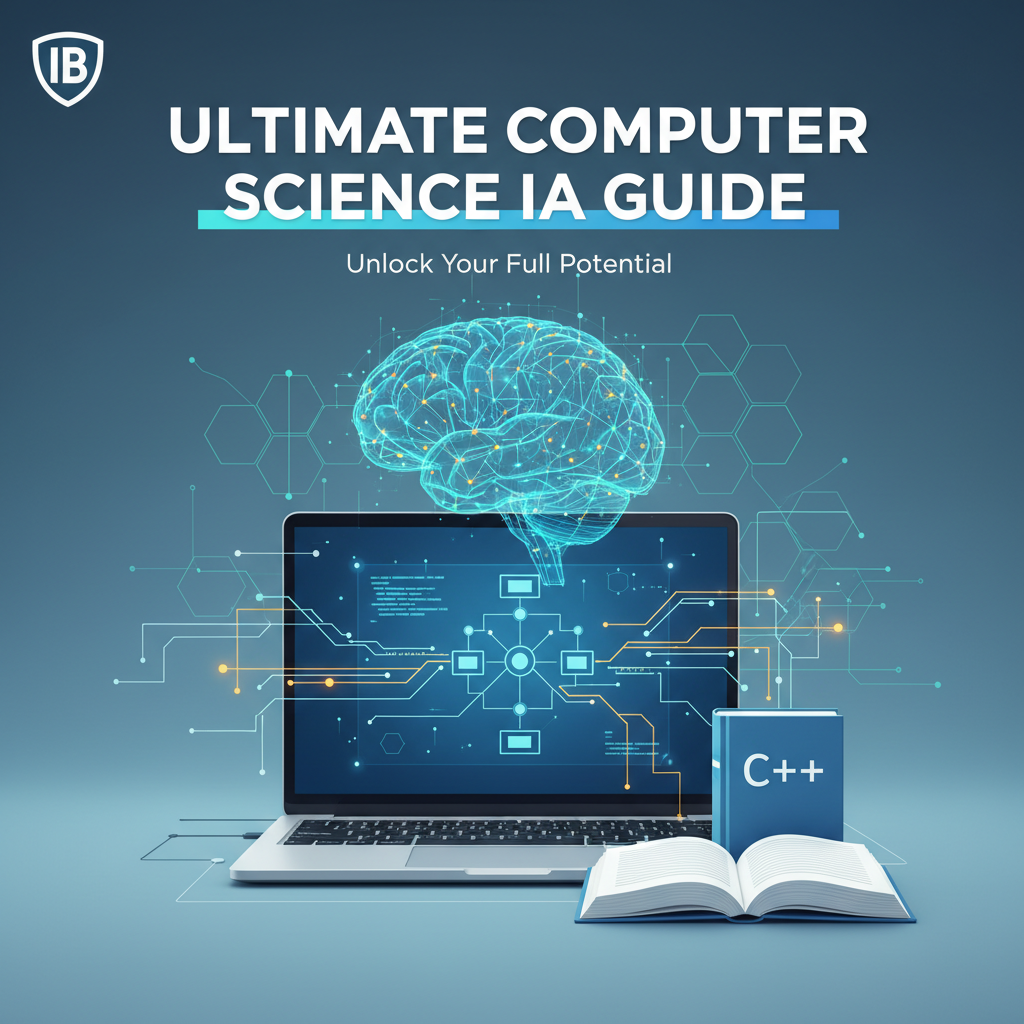
The IB Computer Science Internal Assessment (IA) is more than just a coding project; it’s your chance to play detective, designer, and developer all at once, creating a real computational solution for a real person. We've seen hundreds of students turn great ideas into top-scoring IAs, and honestly, the secret sauce is always in the process. This guide is your roadmap to mastering the "Solution" component, from finding the right problem to proving your program is a success.
By using this guide, you will be able to:
This isn't just another assignment. Your IA is a massive chunk of your final grade—30% at Standard Level (SL) and 20% at Higher Level (HL). It’s an individual project where you find a client, understand their problem, and build a software solution from the ground up. The examiner wants to see your journey, not just the final code. Common traps include picking a fake problem, not talking to your client enough, or writing a shallow evaluation. Let's make sure you sidestep all of them.
Let’s be blunt: without a genuine client, your IA will struggle to score well. Your client provides the authentic context that turns your project from a simple coding exercise into a legitimate, problem-solving investigation. They are your anchor for defining requirements and, most importantly, for evaluating whether your solution actually works in the real world.
Your ideal client is someone accessible, articulate, and invested in the outcome. Think about teachers, school librarians, sports coaches, a family friend who runs a small business, or the head of a school club. They should be:
This is where you put on your detective hat. A great interview is the difference between a vague project and a focused, high-scoring one. Use this template to guide your first conversation and ensure you walk away with everything you need to start planning.
| Lanterna's Client Interview Template | |
|---|---|
| Client Name: | |
| Date(s) of Interview: | |
| Interview Method: | (e.g., In-person, Video Call) |
| I. Initial Problem Identification | |
| |
| II. Desired Features & Functionality | |
| |
| III. Constraints & Limitations | |
| |
| IV. Defining Success (Measurable Criteria) | |
| |
Think of your IA as a journey through four distinct phases. Nailing each one is key to hitting the top marks in the assessment criteria.
Focus: Laying a rock-solid foundation. (Criterion A & B)
Your Goal: Clearly define the problem, justify your solution, and set measurable success criteria based on your client interviews. Start sketching out your ideas with flowcharts and basic UI wireframes. This is also where you begin your "Record of Tasks" (RoT), your project diary.
Focus: Turning your ideas into a concrete blueprint and then into code. (Criterion B & C)
Your Goal: Create detailed designs like UML diagrams, database schemas, and pseudocode for complex algorithms. Then, start coding! Write clean, efficient, and well-commented code. Remember to include annotated snippets in your report to explain your logic. HL students are expected to use more advanced techniques here.
Focus: Trying to break your program so you can make it stronger. (Criterion D)
Your Goal: Create and execute a thorough test plan. Test for normal use, edge cases (like entering a 0 or a very large number), and invalid data to check your error handling. Document everything with screenshots. Crucially, have your client test it and record their feedback. You'll also need to record a short video (max 7 mins) demonstrating your solution in action.
Focus: Critically judging your own work against the goals you set. (Criterion E)
Your Goal: Go back to the success criteria from Phase 1. For each one, evaluate how well your final product met it, using evidence from your testing and direct feedback from your client. Be honest about your solution's strengths and weaknesses, and suggest specific, realistic improvements for the future.
.png)
A complete guide to the IB Internal Assessment. Learn how to choose a topic, manage your timeline, and structure your IA for a top grade. Includes tips for parents.

Master your IB History IA with this ultimate guide. Get high-scoring topic ideas, structure advice, assessment criteria breakdown, and expert tips to avoid common pitfalls and achieve a 7.
.png)
Struggling with your IB Math AI IA? Our complete guide breaks down the marking criteria and structure. Find a great topic with our expert tips and successful examples.

What is the Extended Essay (EE)? Get a complete overview of this mandatory 4,000-word research paper in the IB Diploma Programme core.
Master your IB subject choices for university. Get strategic advice on crucial SL vs. HL differences and expert pathways for STEM, Business, and Humanities degrees.

Master your IB exams by understanding key command terms. Our expert guide provides a complete list of definitions for terms like 'analyze', 'discuss', and 'evaluate'.
.png)
Master your IB Math AA IA with this comprehensive guide. Find perfect topic ideas that allow deep mathematical exploration, expert examples, structure tips, and common mistakes to avoid for a 7-level score.
Master the IB Geography IA with our guide. Learn to write a sharp research question, meet all 6 assessment criteria, and use data visualization for a high-scoring report.
600+ handpicked tutors from across the world with the best background and experience.

Geography shouldn't limit your potential. Lanterna provides premium online IB tutoring across the world, being partners with 250+ IB schools worldwide. Our country guides explore how the IB landscape shapes up and how our tutoring supports it perfectly.

1 hour of online tutoring in any subject with a 40+ IB graduate who scored a 7 in your subject.
No strings attached. By filling out the form you accept our T&Cs.
We are IB experts committed to achieving your academic goals.