35 TOK Exhibition Object Ideas (With Guided Questions)
The TOK Exhibition is where you prove you can do TOK in the real world — not just talk about it. You’ll choose one of the 35 prescribed IA prompts, pick three specific real-world objects, and write a 950-word commentary linking each object to your prompt and TOK themes.
This guide is designed to make the hardest part easy: choosing strong objects. You’ll get 35 diverse object ideas (from a tweet to a toy to a map projection), plus guided questions that help you connect any object to your prompt and the core themes.
By the end of this guide, you will be able to:
- Pick objects that are specific, contextualised, and easy to analyse.
- Use guided questions to generate high-quality TOK analysis quickly.
- Link each object clearly to your IA prompt and the core themes.
- Avoid the #1 exhibition killer: description without analysis.
How to Use This List
Don’t randomly grab “cool” objects. Start with your IA prompt, then choose objects that naturally create three different angles (e.g., personal vs shared knowledge, ethics vs power, certainty vs uncertainty). For each object idea below, use the guided questions to test whether it will produce real TOK analysis — not just a story.
The Lanterna Tip: If you can’t answer at least 3 guided questions with depth, the object is probably too generic — or you don’t know enough about its real context yet.
What Makes an Exhibition Object “High Scoring”
The IB doesn’t want “a book” or “a phone.” They want this exact thing, in this exact context, and why it matters for knowledge.
| Avoid This (Generic) | Do This (Specific) |
| A tweet | A specific tweet posted on a specific date about a specific event (with screenshots + context) |
| A toy | A specific children’s toy with a known design goal (e.g., “STEM learning”) and marketing claim |
| A map | The 1569 Mercator projection map (or a modern web map projection setting) and what it distorts |
| A textbook | A specific edition/page showing a definition or diagram — and how it frames “knowledge” as certain |
The 35 TOK Exhibition Object Ideas
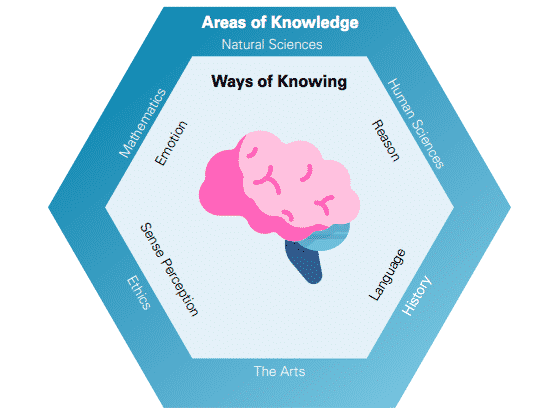
Each idea includes guided questions to help you link it to your IA prompt and TOK core themes (knowledge & the knower, knowledge & technology, knowledge & language, knowledge & politics, knowledge & religion, knowledge & indigenous societies).
-
1) A screenshot of a specific tweet (or thread)
- What makes this “knowledge” vs opinion — and who decides?
- How does the platform’s design shape what feels true?
- What would count as justification here (evidence, authority, virality)?
-
2) A children’s toy marketed as “educational”
- What counts as “learning” according to the toy’s design?
- Whose knowledge is prioritised (Western STEM, cultural norms, gender roles)?
- Is the toy teaching skills, beliefs, or behaviours?
-
3) A world map showing a specific projection (e.g., Mercator)
- How does representation distort knowledge of reality?
- What assumptions are built into “objective” visuals?
- How does this link to power, politics, or education?
-
4) A “Before/After” edited photo (original vs filtered)
- How does technology change what we accept as real?
- Does appearance become a kind of “evidence” socially?
- Who benefits from the distortion?
-
5) A fact-check article correcting a viral claim
- What methods are used to justify “truth” here?
- Why do people prefer the false version?
- How do trust and authority shape knowledge acceptance?
-
6) A school exam mark scheme
- What does this document treat as valid knowledge?
- Does it reward understanding or compliance?
- How does assessment shape how we learn?
-
7) A translated sentence in two languages (same meaning? not quite.)
- What is lost/added when knowledge moves through language?
- Is meaning stable or constructed?
- How does language shape what can be known?
-
8) A political campaign poster/ad
- How is “knowledge” used as persuasion?
- What role do emotions play in belief formation?
- How do we distinguish evidence from rhetoric?
-
9) A graph used in the news (with axes/scale choices)
- How do presentation choices influence interpretation?
- What assumptions are hidden in the data?
- When does data become “truth” socially?
-
10) A museum label describing an artefact
- Whose perspective is being presented as authoritative?
- What is omitted — and why?
- How does institutional power shape shared knowledge?
-
11) A religious object used in a real practice (not just “a holy book”)
- What kind of justification operates here (faith, tradition, experience)?
- How does community shape what counts as knowledge?
- What happens when this clashes with other AOKs?
-
12) A medicine leaflet / drug advertisement
- How is scientific knowledge communicated to non-experts?
- Where do uncertainty and risk get hidden?
- Who is responsible for “knowing” (patient vs expert)?
-
13) A personal screen-time report
- What does this data claim to “know” about you?
- Is quantification the same as understanding?
- How does measurement change behaviour?
-
14) A deepfake clip (or article discussing one)
- What happens to “seeing is believing”?
- How should standards of evidence change?
- Who controls verification in the future?
-
15) A family heirloom with a story attached
- How do memory and narrative create “knowledge”?
- Can personal knowledge be reliable without evidence?
- What makes a story true to a knower/community?
-
16) A protest sign or slogan
- How does language compress complexity into certainty?
- When does moral conviction override evidence?
- How is knowledge used to justify action?
-
17) A set of community rules / terms of service
- What knowledge is allowed vs banned — and why?
- Who decides what counts as “harmful misinformation”?
- How do rules shape shared knowledge ecosystems?
-
18) A cookbook recipe (or family recipe)
- What kind of knowledge is this — procedural, cultural, personal?
- How is it transmitted (written, demonstration, tradition)?
- Can “knowing how” matter more than “knowing that”?
-
19) A scientific diagram/model (e.g., the atom model)
- How do models simplify reality to create knowledge?
- When is simplification misleading?
- How does a model’s purpose shape what is “true”?
-
20) A historical textbook passage (two editions, two narratives)
- How does history depend on perspective?
- Who gets to be “objective”?
- How do politics and identity shape shared memory?
-
21) A “verified” badge or authority marker online
- Why do we outsource trust to symbols?
- What’s the difference between credibility and truth?
- How does authority shape belief formation?
-
22) A meme used to make a claim
- How does humour bypass critical thinking?
- Can memes transmit knowledge — or just reinforce belief?
- What gets lost when arguments become jokes?
-
23) A public apology statement (celebrity/company)
- What counts as “truth” in reputation management?
- How do language and framing manipulate perception?
- Is sincerity knowable, or only inferred?
-
24) A lab report with “unexpected results”
- How do we treat anomalies — error or discovery?
- How do expectations influence interpretation?
- What makes evidence strong enough to change belief?
-
25) An indigenous artefact/story representation (with proper context)
- What counts as knowledge outside Western frameworks?
- How does ownership/appropriation affect knowledge sharing?
- How do we evaluate knowledge across cultures fairly?
-
26) A “scientific consensus” statement (e.g., from a professional body)
- Why does consensus matter for knowledge claims?
- When should we distrust consensus?
- How do uncertainty and probability fit into knowledge?
-
27) A private journal entry (or a redacted excerpt)
- What can introspection tell us — and what can’t it?
- How do bias and emotion shape self-knowledge?
- Is personal truth the same as knowledge?
-
28) A chatbot answer you received (and your verification attempt)
- What does it mean to “know” something if you didn’t verify it?
- How does convenience change epistemic responsibility?
- Should tools change what counts as justified belief?
-
29) A courtroom sketch / legal verdict summary
- How does the legal system define “truth”?
- What role do narratives play vs evidence?
- Can we ever know what happened — or only what was proven?
-
30) A national anthem lyric (or censored version)
- How does language build identity-based “knowledge”?
- Who is included/excluded by the narrative?
- When does collective belief become political knowledge?
-
31) A “recommended for you” feed screenshot
- How does personalization shape what you think is true?
- Does convenience create epistemic bubbles?
- Who is responsible for bias — you or the algorithm?
-
32) A product label claim (e.g., “clinically proven”)
- What does “proven” actually mean here?
- How does marketing borrow scientific authority?
- How should knowers judge claims under uncertainty?
-
33) A school rulebook / behaviour policy
- What “knowledge” about students is assumed?
- How do institutions enforce norms as if they’re truth?
- When is compliance mistaken for understanding?
-
34) A piece of art with a controversial interpretation
- Can interpretation be knowledge, or just opinion?
- How do culture and context shape meaning?
- What would count as justification in the arts?
-
35) A news headline vs the full article (same story, different “truth”)
- How does language frame reality?
- Why do simplified claims spread faster?
- How do we build good knowledge habits as knowers?
Mini Checklist Before You Commit to an Object
- Is it specific? Could someone else find the exact same object/context?
- Does it create TOK analysis? Not just description or personal storytelling.
- Can you link it clearly to the prompt? In one sentence, no hand-waving.
- Does it add a new angle? Each object should say something different.